HeyBraza vs the course platforms
Udemy, Coursera, Pluralsight, Skillbox - four ways to buy video of someone else doing the thing. here's how a tutor on your own screen is different.
by Timur Latipov · · 7 min read

the short version
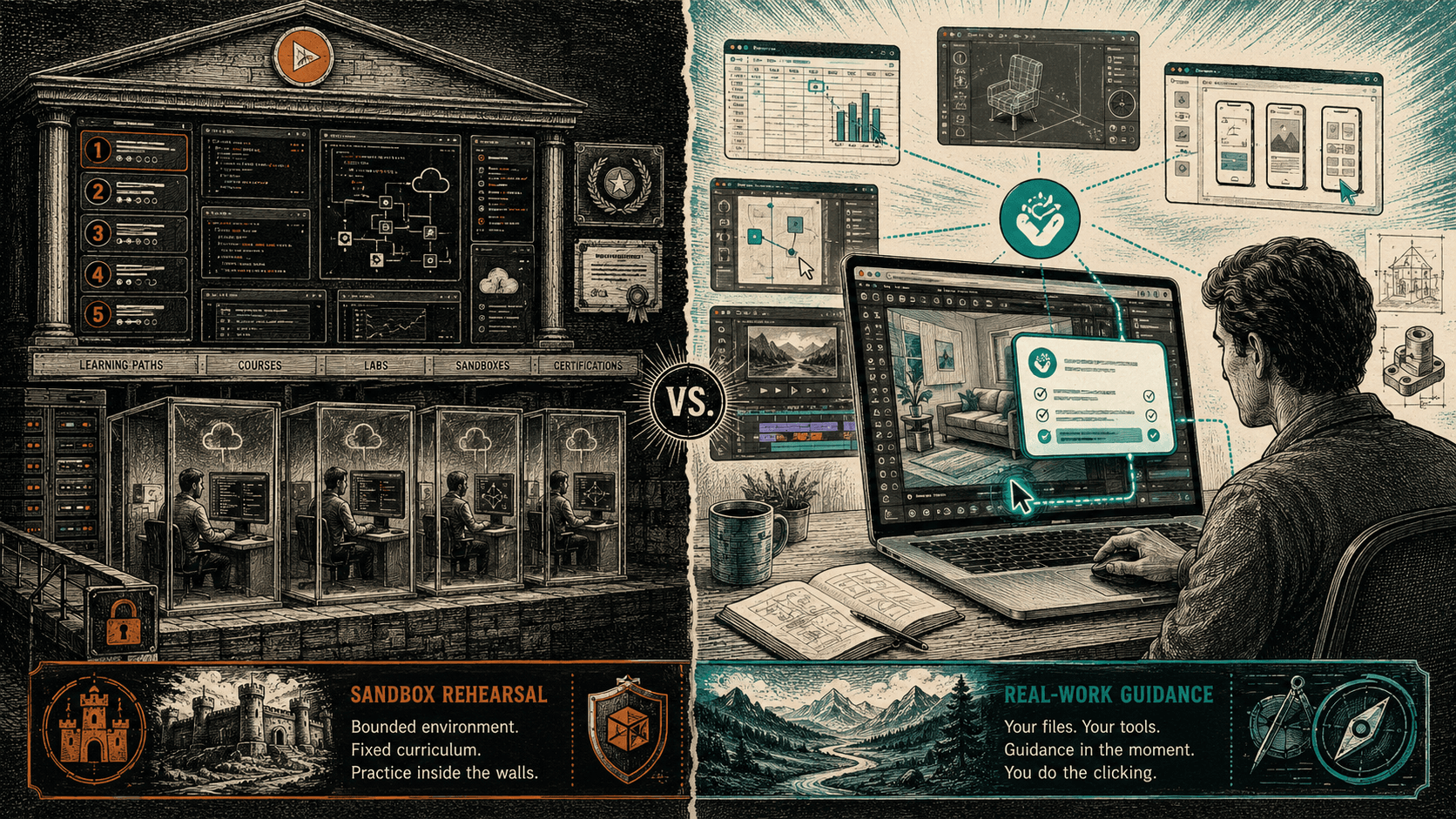
The four biggest ways to learn an app - Udemy, Coursera, Pluralsight and Skillbox - are, underneath the branding, the same product: pre-recorded video you watch, made once, for everyone. Two of them are now literally one company, since Coursera bought Udemy in a deal that closed in May 2026. HeyBraza isn't a course library. It's a different category - a new way to learn any app by doing: you ask on your own screen, it shows you the next step, and you make the click yourself, so the skill ends up yours instead of the machine's.
That's the whole difference. A course shows you someone else finishing their file; HeyBraza helps you finish yours. Courses are priced by hours and catalog size - Udemy lists over 200,000 of them - and most of it goes unwatched; across studied online courses the median completion rate is about one in eight. HeyBraza is priced by the only thing that matters: how good you get at the app you're actually using.
Every so often someone asks which course platform HeyBraza competes with. The honest answer is all of them and none of them, and it's worth spelling out why.
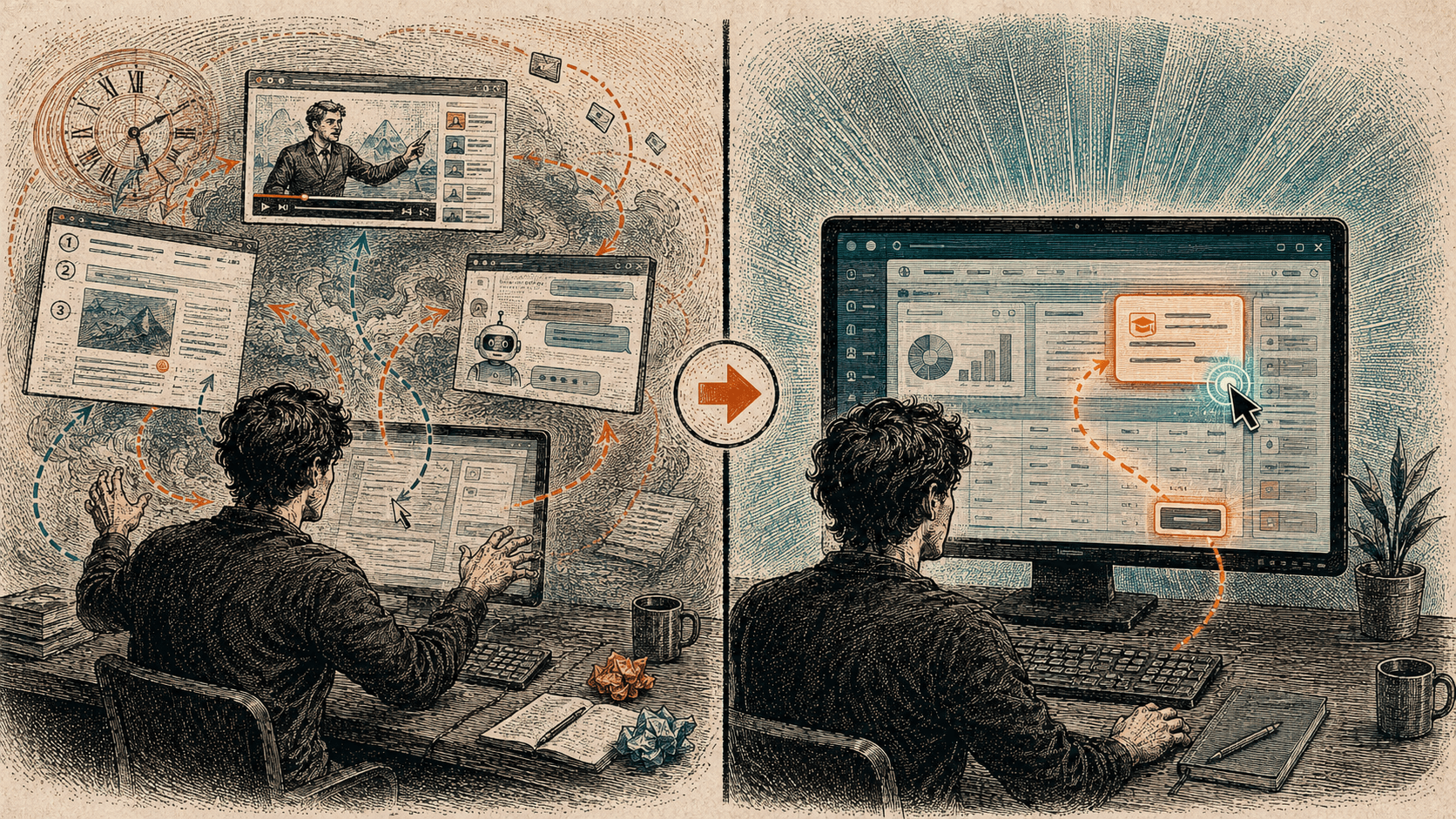
From the outside these four look different - a marketplace, a university front-end, a developer subscription, a bootcamp. They share one mechanism: you watch a recording of a person doing a thing, then go try to reproduce it on your own. HeyBraza changes the mechanism, not the price tag.
Udemy - the everything marketplace
Udemy has the biggest catalog by far, north of 200,000 courses, list-priced up to $199.99 but effectively always on sale for ten or twenty dollars, because anyone can publish and the supply is endless. That's its strength and its problem at once: for any app you'll find a course, and you can't tell the good one from the person reading the manual aloud until you've bought it. Udemy has spent recent years steering off the open marketplace toward subscriptions and cutting the instructor's cut - from 25% down to 15% over three years - which tells you where it thinks the money is. Underneath, it's pre-recorded video. Nothing sees your screen.
Coursera - the university front-end (and now Udemy too)
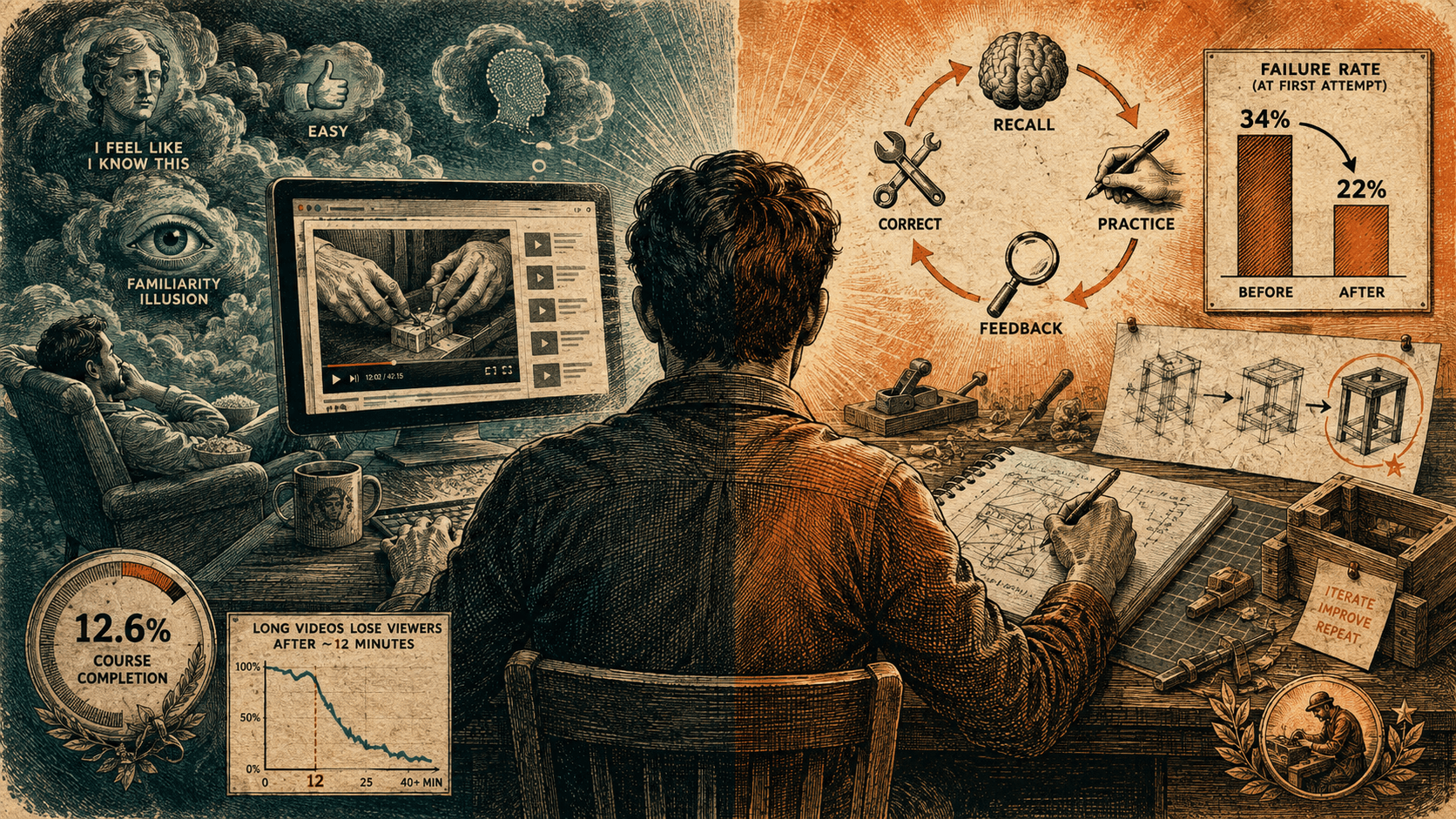
Coursera sells trust: real university and vendor names - Google, IBM - on a certificate. It's a bigger business than it looks, about 197 million registered learners and roughly $757 million in 2025 revenue, and in May 2026 it absorbed Udemy, so two of the four names here now sit under one roof. Its weak spot is the one it's most measured on: on the free tier, median course completion is about 12.6%. The paid certificates do better, mostly because paying makes people show up - which is a fact about commitment, not about video. It's still a watch-then-reproduce product.
Pluralsight - the one with real labs
Pluralsight is the fairest test of the "it's all just video" line, so I'll be straight: it isn't, quite. Alongside about 6,500 courses it has around 3,500 hands-on labs and cloud sandboxes - actual do-it environments, included across its paid tiers at $29 to $45 a month. That's real, and it's more than the others offer. The gap that remains is the one that counts: a Pluralsight lab is a sandboxed exercise inside Pluralsight's own curriculum, not correction on your file, in your app, on the task you actually sat down to do. It's the closest of the four to HeyBraza, and still on the other side of the line.
Skillbox - the installment bootcamp
Skillbox, a Russian-market platform owned by VK, sells long "profession" programs - three months to a year - usually paid off in bank installments running to tens of thousands of rubles. The format is pre-recorded video plus cohort webinars. Its most-documented problem is refunds: in October 2024 a group of former students sued over roughly 3.4 million rubles, saying they'd completed as little as 2 to 20% of a program and were refused a proportional refund. That's the shape of the whole category taken to its logical end - you pay for the twenty hours up front and consume a fraction of them.
what all four share
- Pre-recorded. Made once and sold many times, so made for nobody in particular.
- Priced by supply. Hours of content and size of catalog, not whether you actually get good at the thing.
- Mostly unwatched. Median completion around one in eight; a lot of what's bought is never opened.
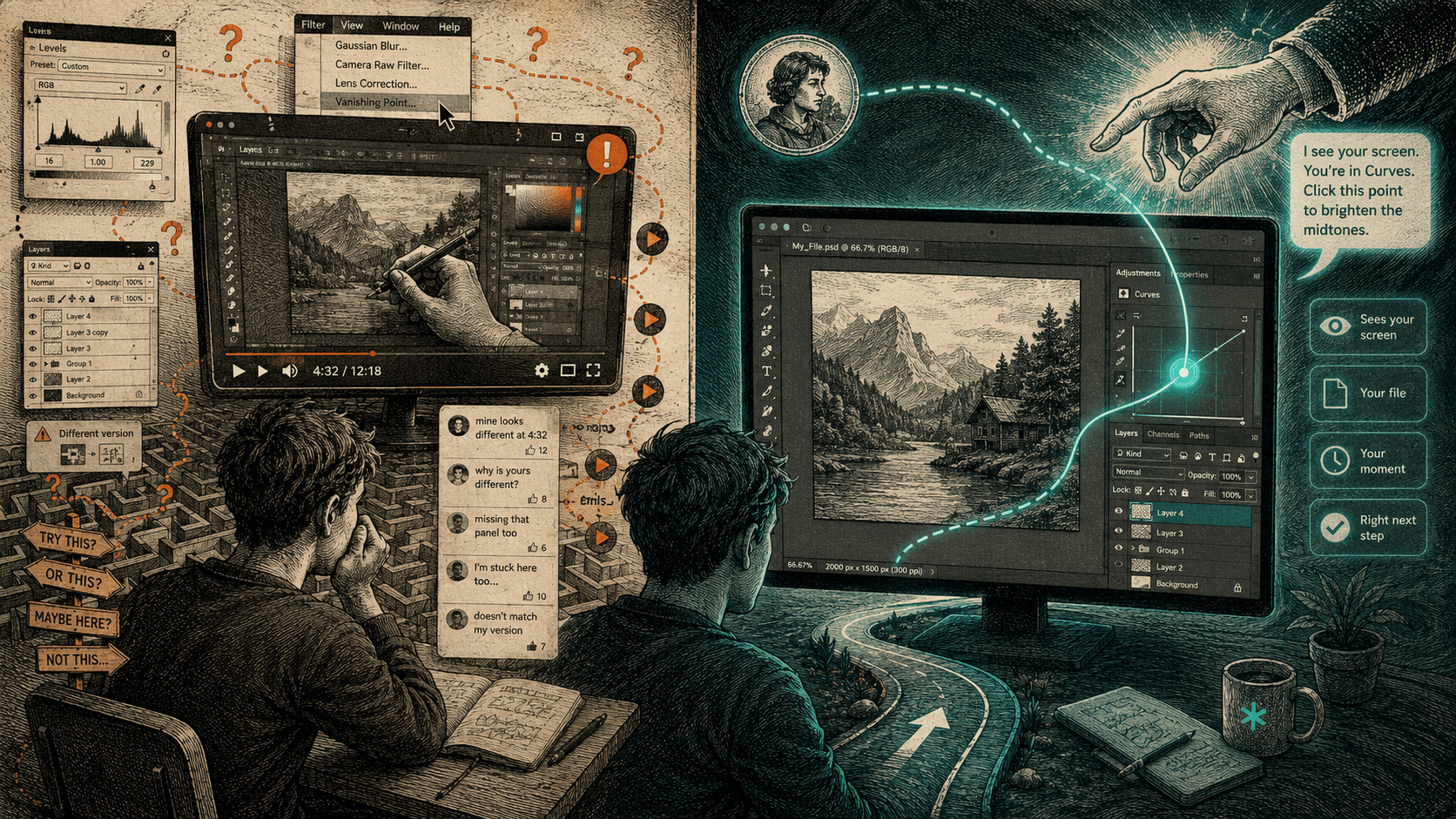
- Blind. None of them can see your screen, so none can be wrong about you - or correct you.
what HeyBraza does instead
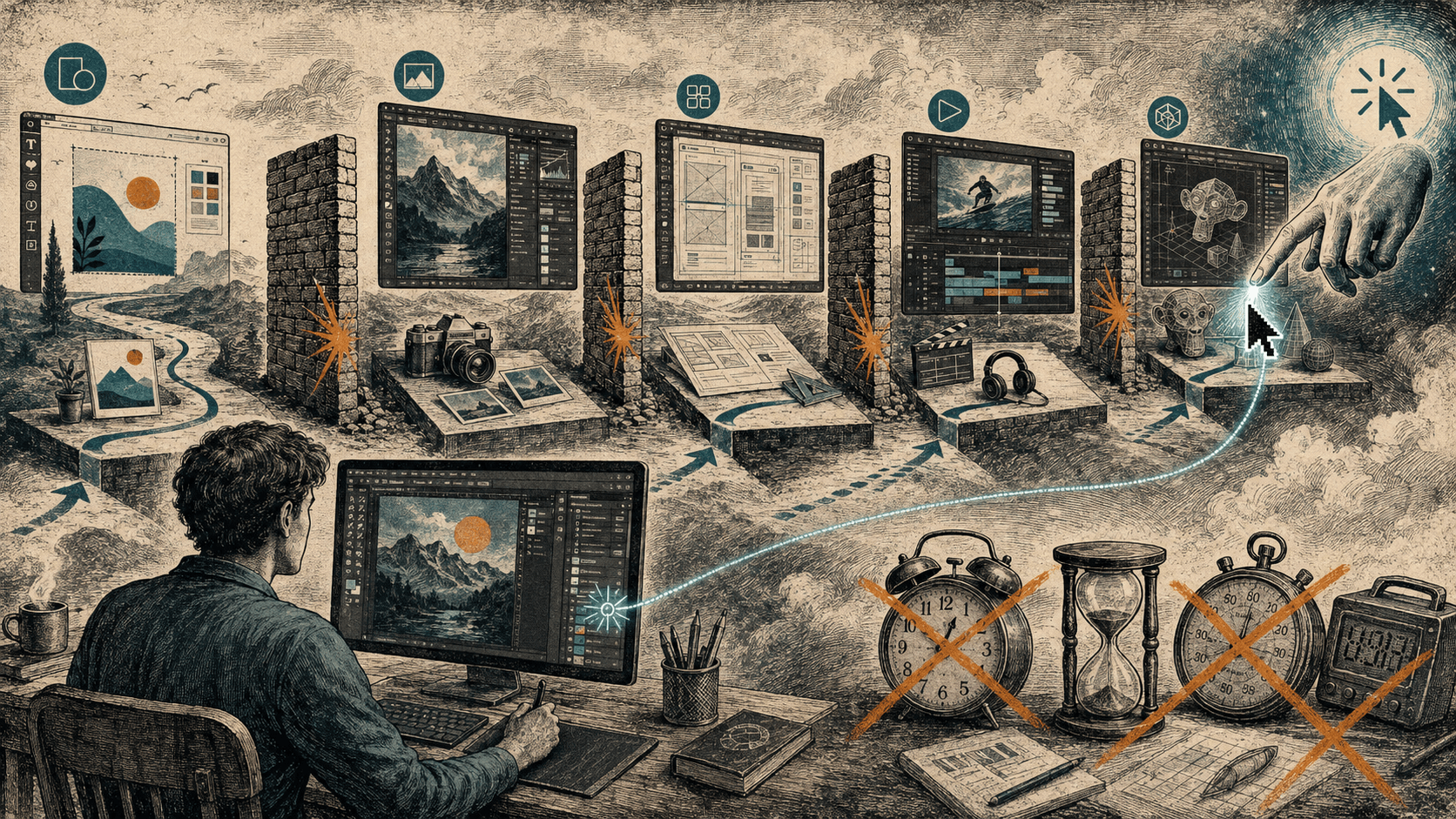
HeyBraza isn't in the catalog business. You hold a key, ask out loud in whatever app you're in - Figma, Blender, Premiere, a spreadsheet - and it points at the next step on your own screen, in your version, about your file. You make the clicks. It takes a beat and it's no magic trick, but it's help during the task instead of a video before it.
So it doesn't really compete with any one of these on its own terms. It competes with the thing they all are - a recording of someone else's work. And the case against that isn't that the recordings are bad. It's that nobody actually wanted twenty hours of someone else's examples; they wanted the ninety seconds that were about them.
A course sells you the afternoon someone else spent learning. HeyBraza spends it on you - your file, your screen, your reps.
To be fair to the list: if you want a credential with a known brand on it, a Coursera certificate is a real thing HeyBraza doesn't offer. If you want structured, sandboxed practice in cloud infrastructure, Pluralsight's labs are good. But those are still the old shape - a fixed path someone else built, that ends where your real work begins. HeyBraza is a different category: a way to learn any app by doing, on your own file, that meets you wherever you are - your first hour in a new tool, a faster route through a task you already know, a workflow that spans three apps - and gets better at the tools you use the more you use it. Getting unstuck is just the smallest version of it.
what to remember
- Udemy, Coursera, Pluralsight and Skillbox are, at core, pre-recorded video you watch - HeyBraza is a new way to learn by doing, on your own screen.
- Coursera acquired Udemy in a deal that closed May 2026, so two of the four are now one company.
- Pluralsight is the honest exception: it has real hands-on labs - but they're sandboxed curriculum, not correction on your own file.
- Courses are priced by hours and catalog size, and most of it goes unwatched (median completion about 12.6%).
- Skillbox's October 2024 refund lawsuit shows the shape of the model: pay for the whole program, consume a fraction.
- A course shows you someone finishing their file; HeyBraza helps you finish yours.
questions people ask
What's the best alternative to online courses like Udemy or Coursera?
It depends what you're buying them for. If you want a brand-name certificate, Coursera still offers something HeyBraza doesn't. But if what you actually want is to get good at the app - to learn it by doing your own work - a screen-aware guide like HeyBraza fits better than any course: it shows you the next step on your real file while you make the clicks, instead of playing you a recording of someone else doing theirs.
Is HeyBraza a course platform?
No. It has no catalog of courses to buy. It runs alongside whatever app you're using - you ask out loud and it shows you the next step on your own screen, about your own file, and you make the click yourself. The unit isn't a twenty-hour course; it's the one step you needed, learned by doing it.
How is HeyBraza different from Pluralsight's hands-on labs?
Pluralsight's labs are genuinely interactive - sandboxed environments where you practice inside Pluralsight's curriculum. The difference is whose task you're doing. A lab is an exercise Pluralsight designed; HeyBraza works on the real file open on your screen right now, in the app you actually use, correcting your actual work.
Are Coursera and Udemy the same company now?
Yes. Coursera announced it would acquire Udemy in December 2025, and the all-stock deal closed on May 11, 2026, making Udemy a wholly-owned subsidiary of Coursera. Two of the four biggest course platforms now sit under one roof.
Why do so few people finish the courses they buy?
Because a course is made once, for everyone, and front-loads all its help before the work - so there's nothing pulling you through once the novelty fades. Across 221 studied courses the median completion rate was about 12.6%. Most bought course content is never finished, and a large share is never opened at all.
sources
// learn a specific app
 learn figma
 learn blender
 learn premiere pro
 learn photoshop
stop reading. go do something - guided, on your own screen.
try for FREE today