watching is not the skill
why you can finish a tutorial and still can't do the thing
by Timur Latipov · · 4 min read · updated
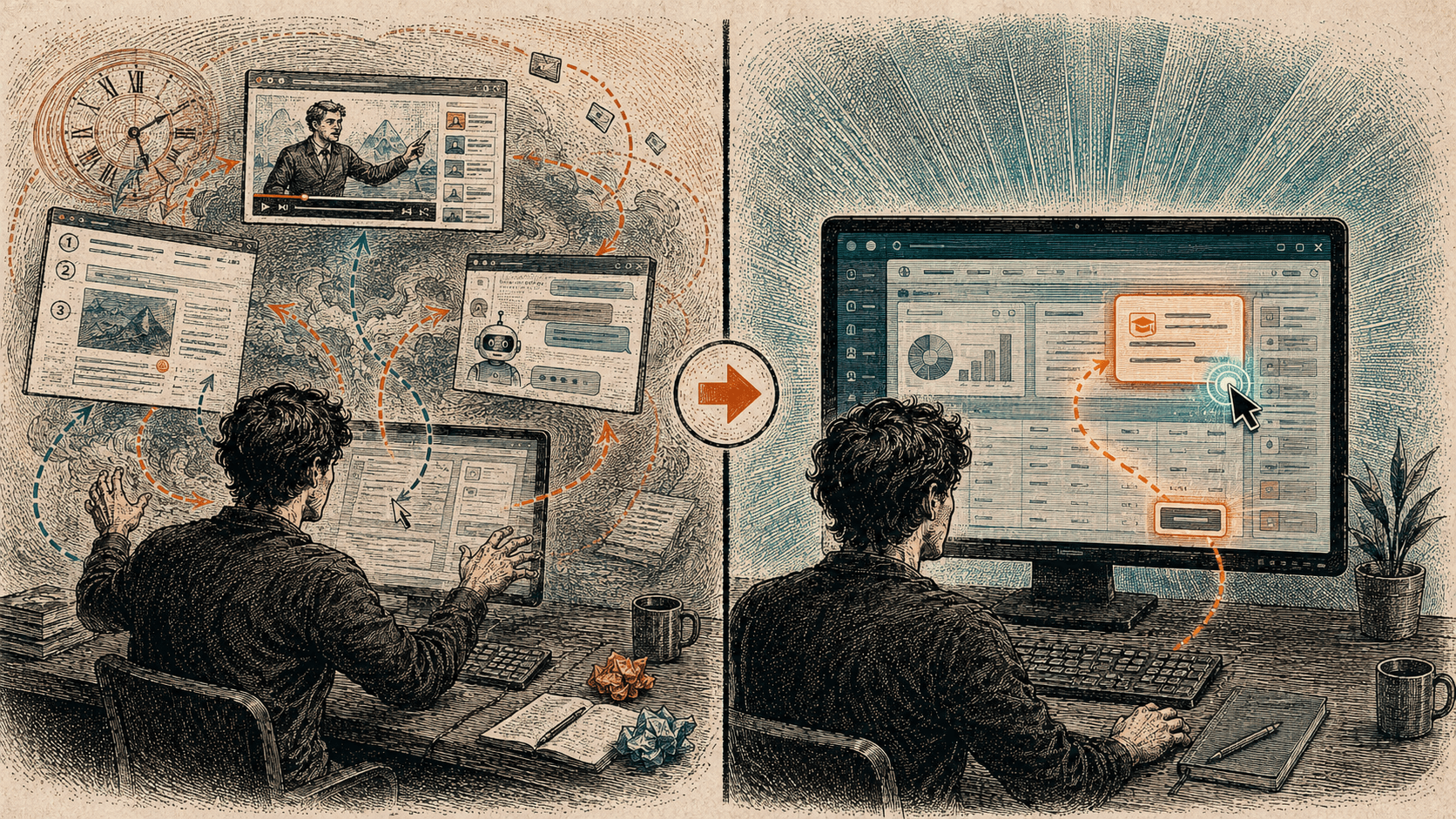
the short version
Fewer than one in ten people who start an online course finish it. The reason isn't laziness. A course teaches you to watch, and watching is not the skill - a skill lives in your hands and is built out of your own reps.
Watching gives you the shape of a task. Doing it shows you the small ways your version is wrong, and being corrected is the actual learning. That correction can only happen while you're doing, on your own file, which is exactly where the tutorial ends. The fix isn't a better video; it's moving the help out of the watching and into the doing.
Fewer than one in ten people who start an online course ever finish it.
The usual explanation is that people are lazy, or busy, or bad at follow-through. I don't buy it. The same people finish shows, finish games, finish books they love. Something about a course makes them stop, and it's worth asking what.
Here's my guess. A course teaches you to watch. And watching is not the skill.
watching builds a feeling, not a skill
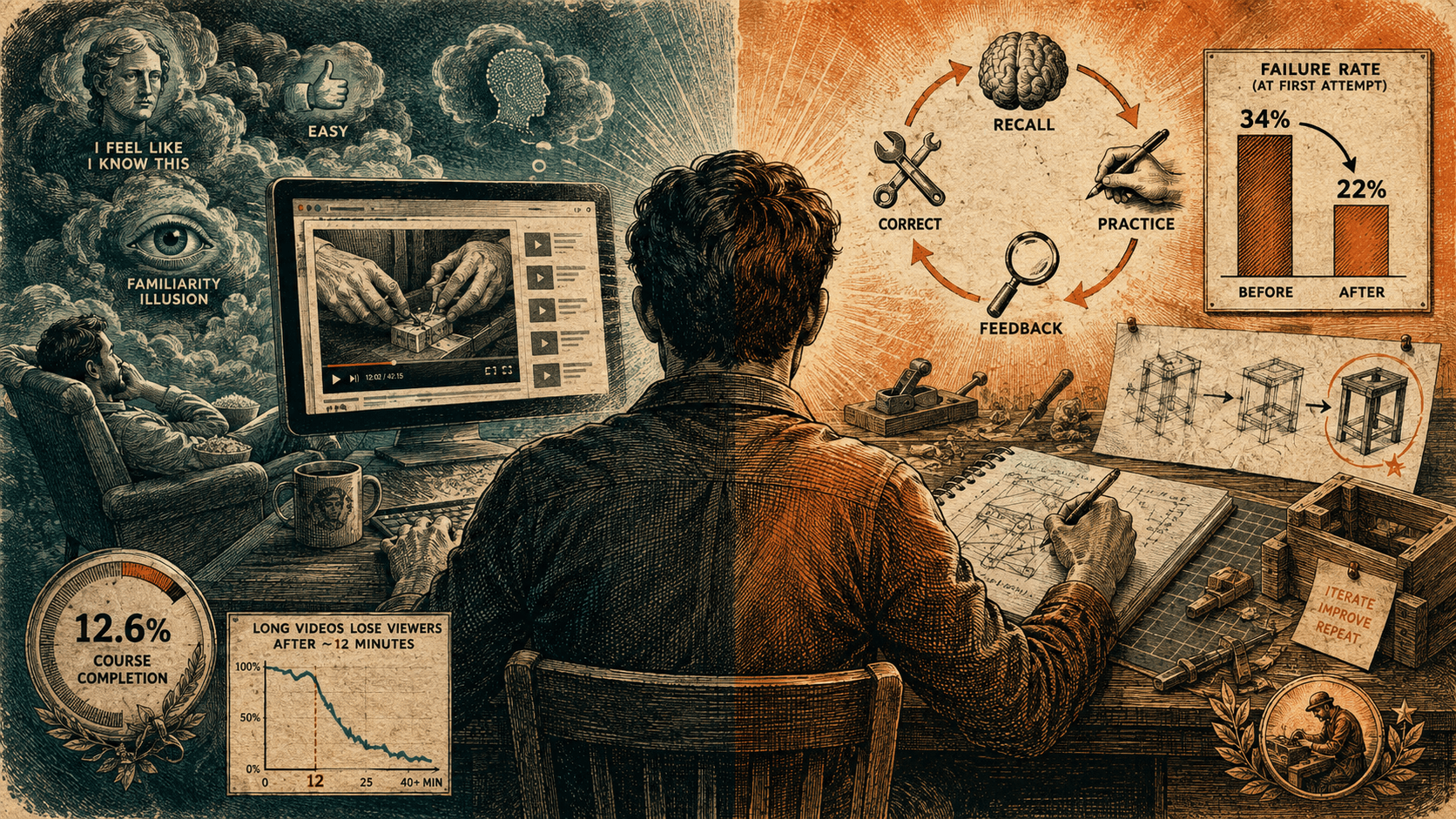
You can watch someone parallel park over and over and still clip the curb on your first try. You can watch a chef debone a fish and then freeze the moment the fish is in your own hands. Watching builds a feeling of knowing that doesn't survive contact with the task. The feeling is real. The skill isn't there yet.
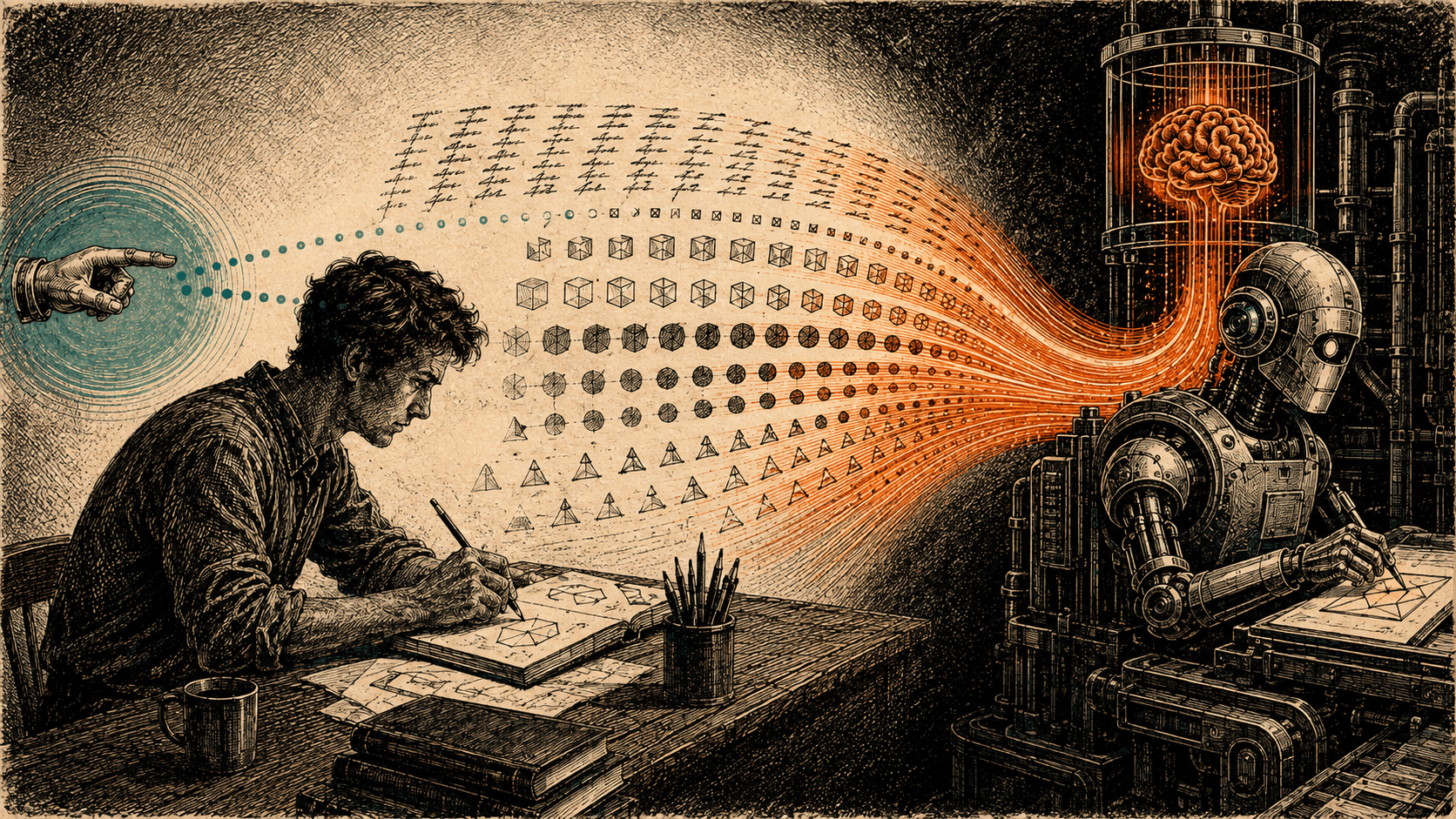
A skill is a doing-thing. It lives in your hands, not your head. It's built out of reps, and the reps have to be yours - nobody can do a push-up for you. Watching gives you the shape of the thing. Doing it shows you all the small ways your version is wrong, and fixing those is the whole point. The correction is the learning. And you can only be corrected while you're doing.
where the forty-minute tutorial breaks
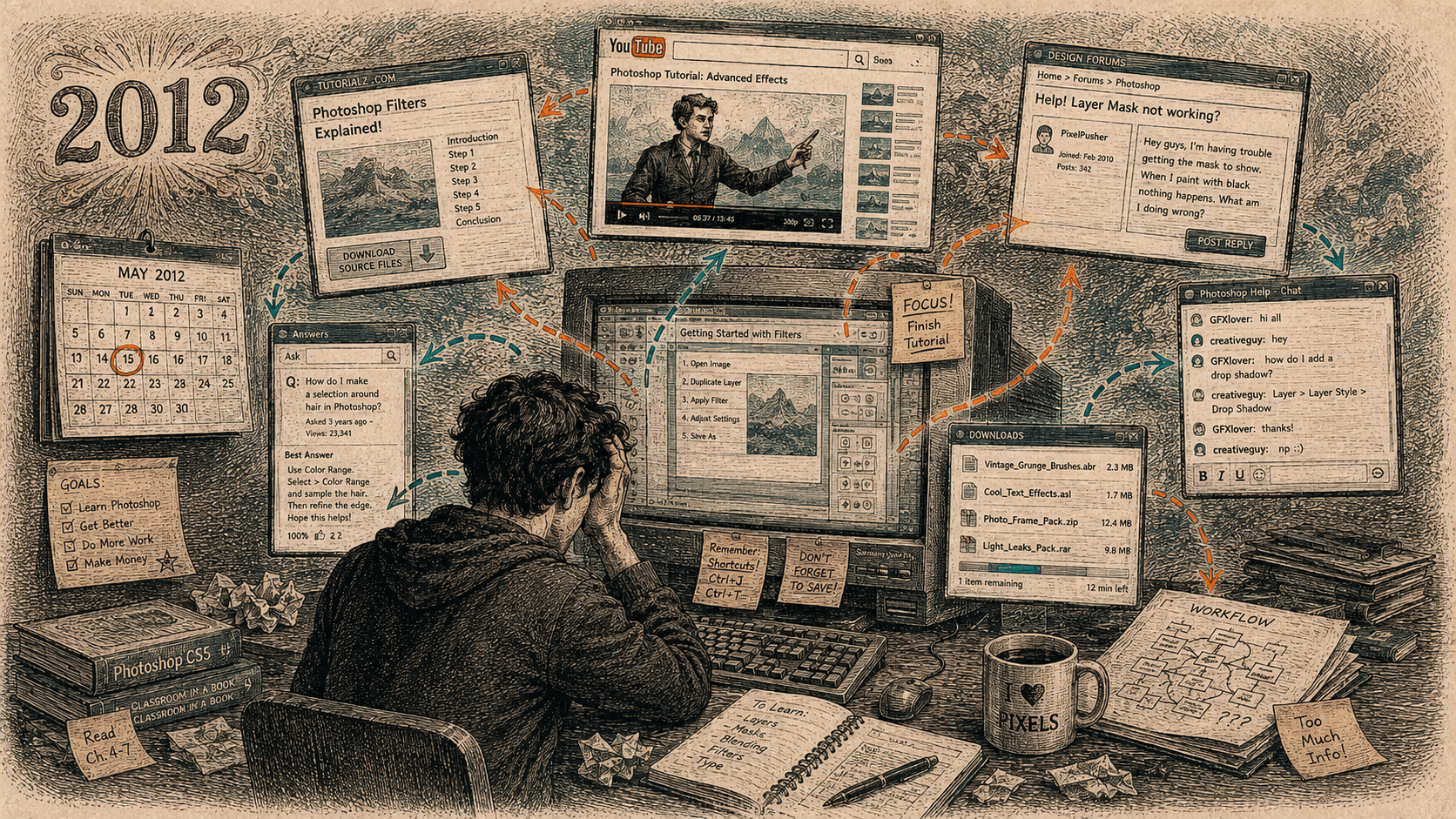
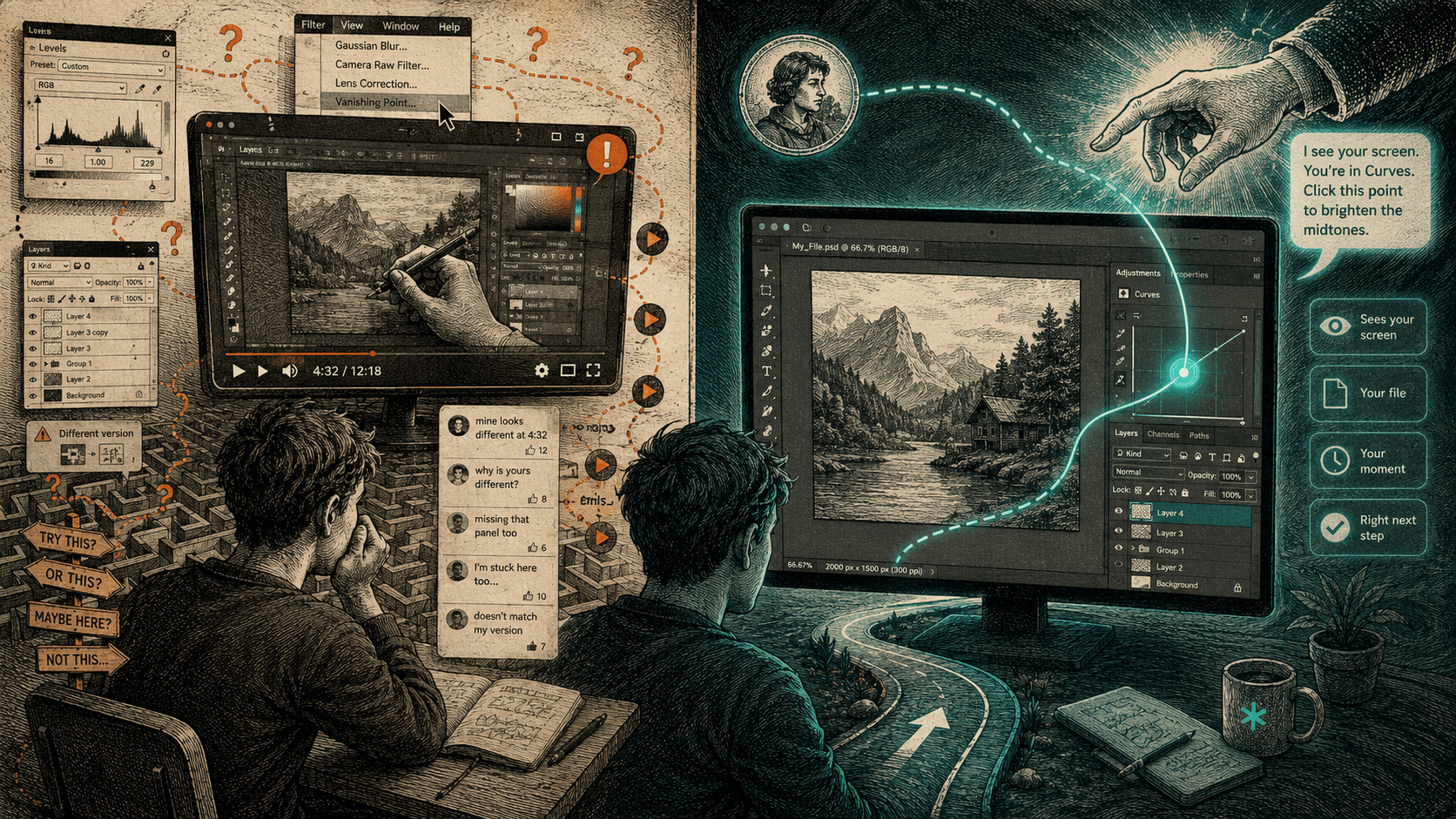
You watch the whole thing and nod along; it all makes sense. You close the tab sure you've got it. Then you open your own file, and it doesn't match:
- The button isn't where it was in the video.
- The menu moved in the new version of the app.
- Your spreadsheet has a column the instructor's didn't.
You're stuck - and the tutorial, which knew exactly what to do for its own clean example, has nothing to say about your mess.
That gap, between the demo and your actual screen, is where all the learning was hiding. It's also exactly where the course ends.
Think about the last thing you truly learned. Not the moment you understood it - the moment you were stuck doing it and had to get yourself unstuck. That's when it went in. You remember it because it cost you something.
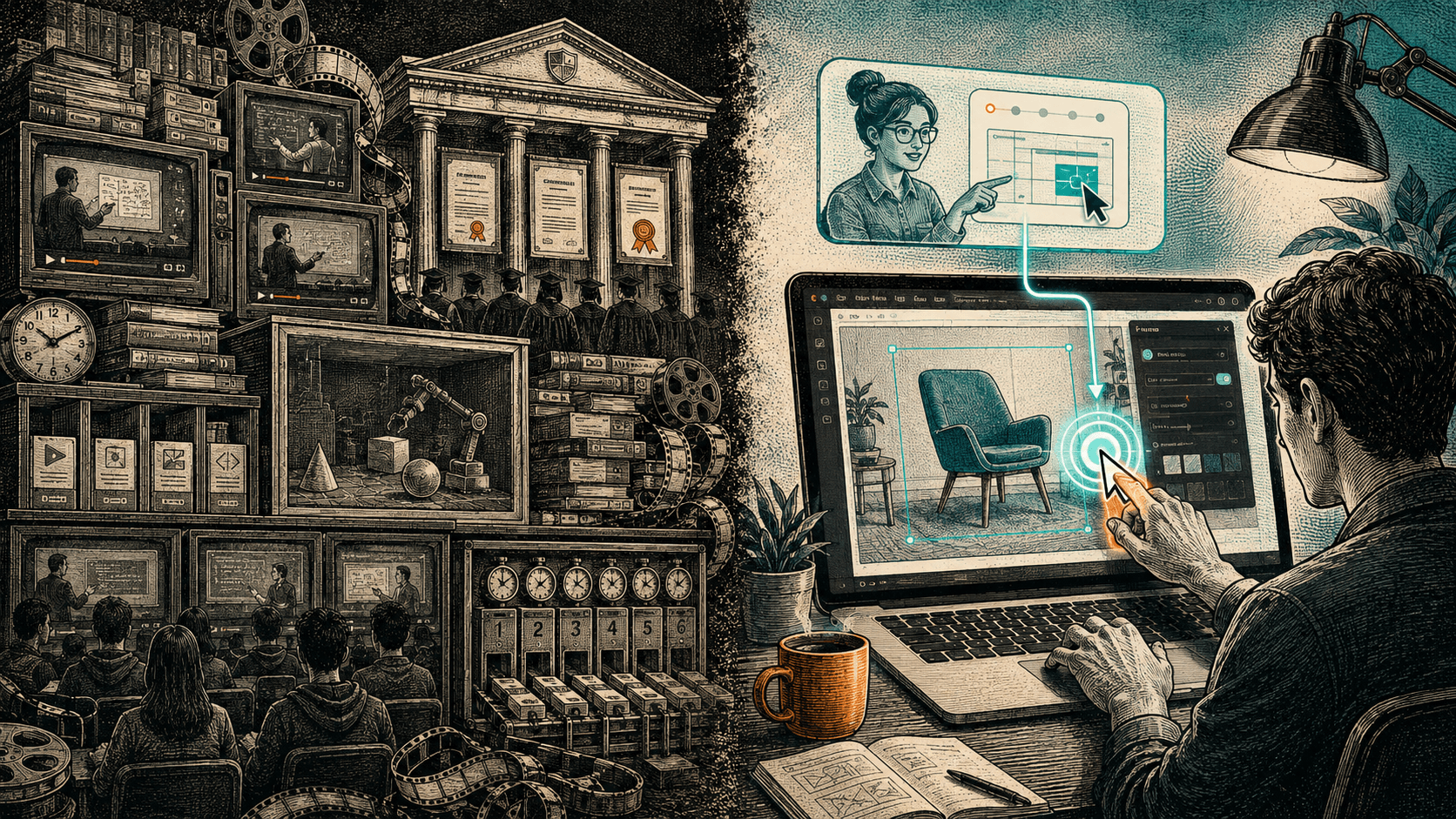
A course front-loads all its help into the part that costs nothing, the watching, and leaves you alone at the part that costs everything, the doing.
It's a strange trade. A course runs a hundred dollars and twenty hours, and most of that is spent making you good at watching a specific person do a specific task on their specific machine. None of which is what you came for. You came to do the thing yourself, next Tuesday, on your own file, with nobody around.
the fix is to move the help, not to make a better video
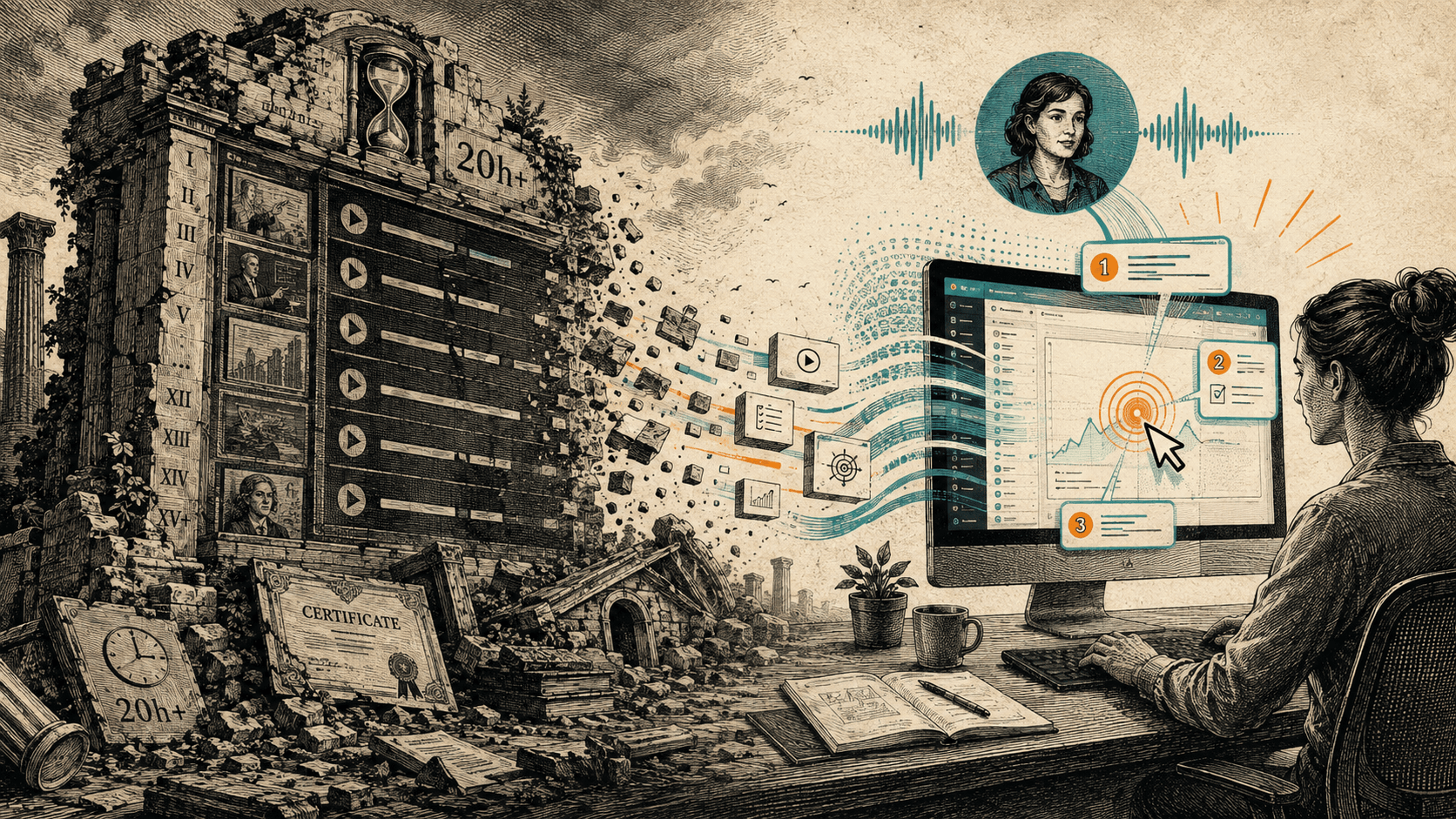
A better video is still a video, still watched cold, still sitting ahead of the moment you actually need it. Take the help out of the watching and put it into the doing - on your own screen, on your own stuck step, at the second you're stuck.
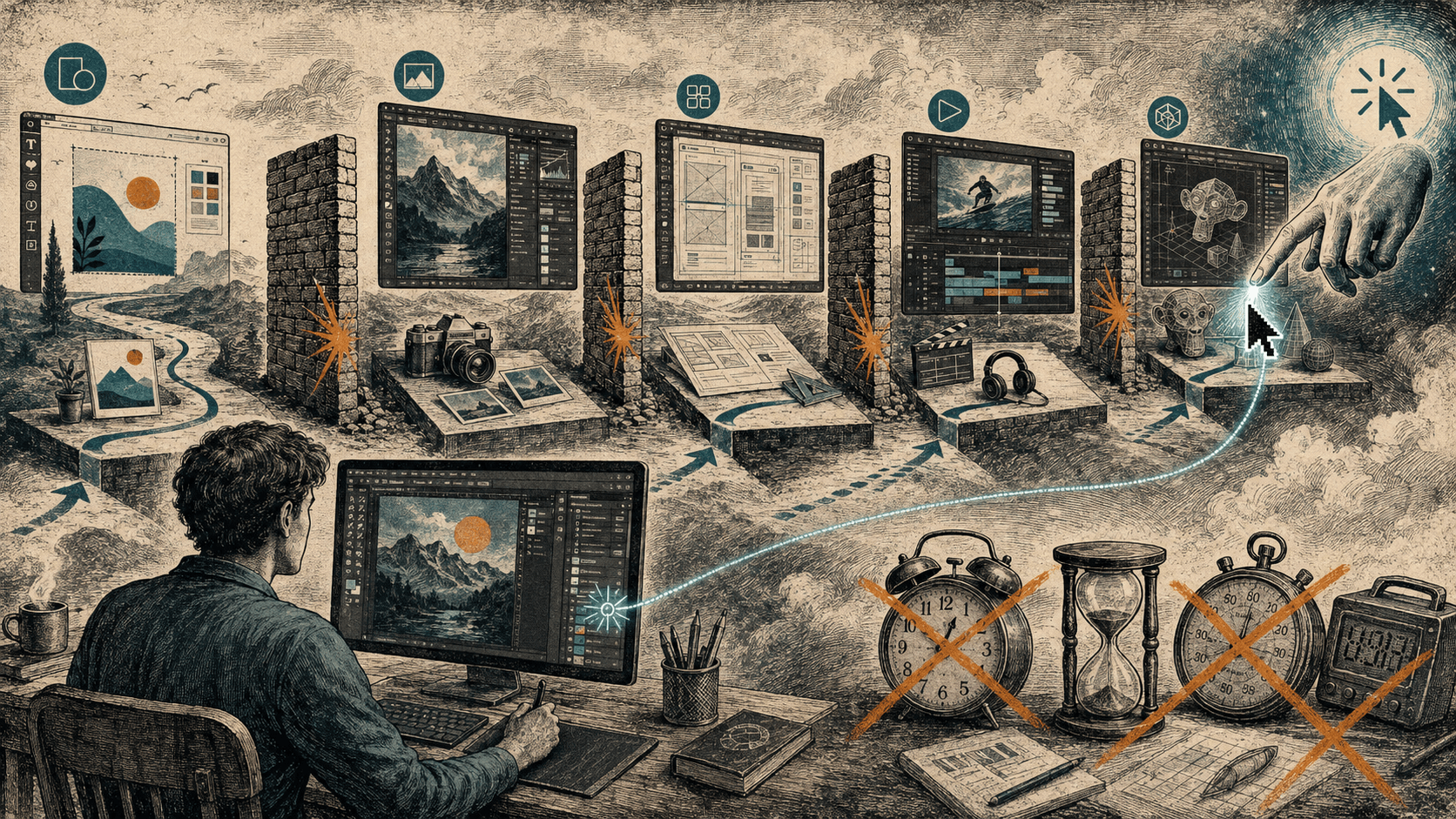
That's a different shape for learning. You're in Premiere, or Figma, or Excel - the real one, your real project - and instead of a video to sit through first, there's something that sees your screen the moment you ask and points at the exact button and talks you through the step. You do the task. Your file, your hands, your reps. The skill has nowhere to go but into you.
learning one thing the honest way
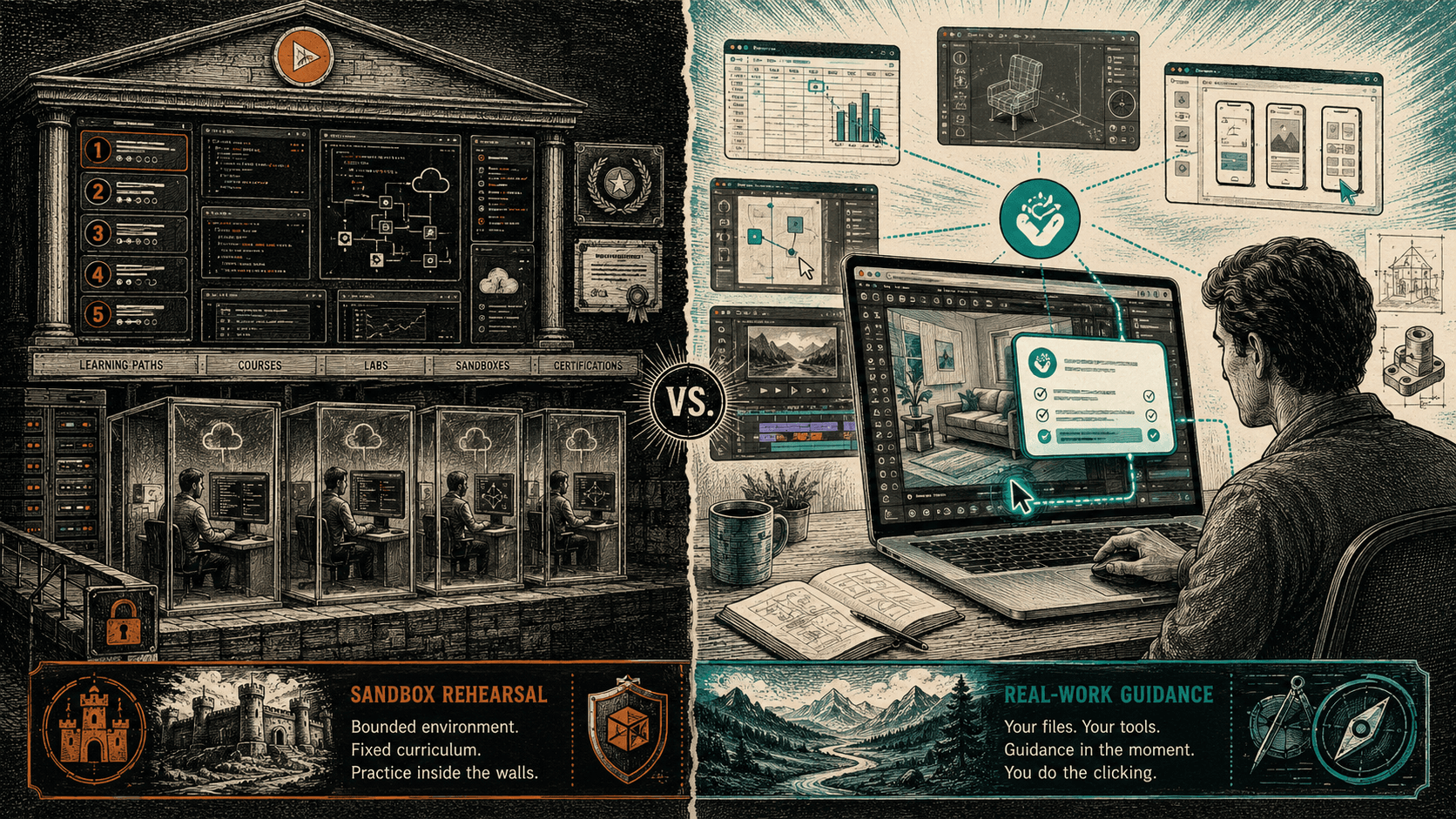
This is the bet behind HeyBraza: not a course you sit through before the work, but a tutor that shows up during it, on the real screen where you're actually stuck. You still do the task yourself - it only makes sure you're not doing it alone. The reps stay yours, which was always the one way the skill was going to move.
The odd part is how long we've done it the other way. We built a whole industry to teach doing, and then spent it teaching watching. Learn one thing the honest way - stuck, on your own screen, help arriving right when you reached for it - and the forty-minute video will never look the same again.
what to remember
- A skill is built from your own reps; watching someone else's reps builds only the feeling of knowing.
- The learning happens in the correction, and you can only be corrected while you're doing.
- Tutorials end precisely where the difficulty starts: your version, your file, your mess.
- Under one in ten people finish an online course - the format, not the person, is what fails.
- The fix is to move the help into the moment of doing, not to produce a better video.
questions people ask
Why can't I do the thing after watching a tutorial?
Because watching and doing are different skills. A video gives you the shape of the task and a strong feeling of understanding, but the skill itself is built out of your own attempts and the corrections that follow them. Until you've done it on your own file and been corrected, the skill isn't in your hands yet.
Why do so few people finish online courses?
Fewer than one in ten finish. It isn't laziness - the same people finish shows, games, and books. A course asks for a hundred dollars and twenty hours up front, spent watching, before you touch the thing you came to learn. The payoff sits behind the least rewarding part.
Is watching tutorials useless, then?
No. Watching is good at giving you the shape of a task and showing you that something is possible. It just isn't the skill. Treat a video as an overview, and expect the real learning to happen the first time you're stuck in your own file.
What does "learning in the flow of work" mean?
It means the help arrives inside the task instead of before it: you're in the real app, on your real project, and guidance shows up at the moment you're stuck. You keep doing the work yourself, so the reps - and the skill - stay yours.
How does HeyBraza teach differently from a course?
HeyBraza doesn't ask you to watch first. You hold a key, ask out loud in whatever app you're using, and it points at the exact next step on your own screen. You do the task; it corrects you while you do. It competes with the course, not with the app.
sources
// learn a specific app
 learn photoshop
 learn affinity photo
 learn canva
 learn figma
stop reading. go do something - guided, on your own screen.
try for FREE today