courses are dead
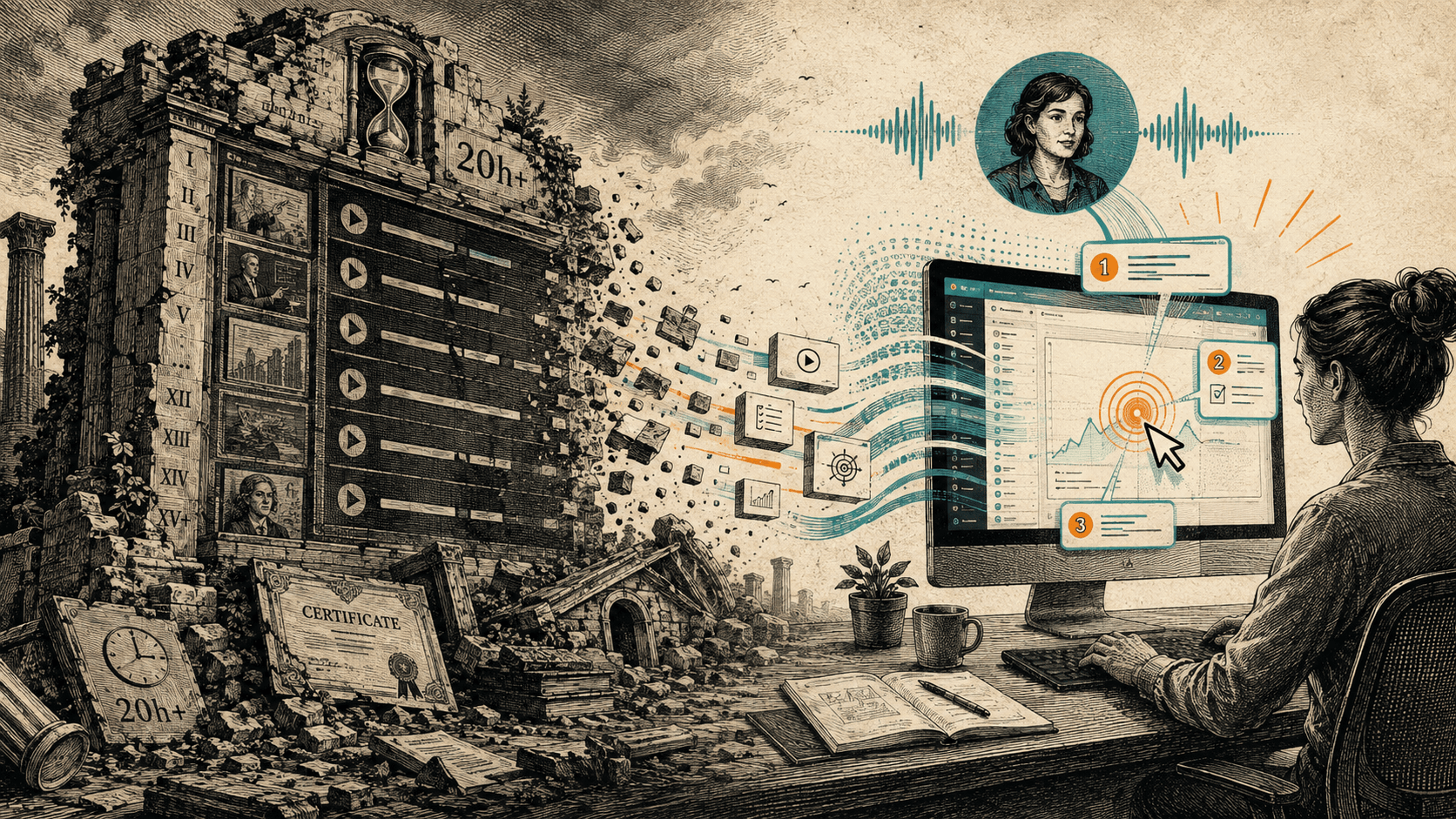
the twenty-hour course was a shape forced by expensive video, and nothing that forced it is still true
by Timur Latipov · · 6 min read
the short version
A course is twenty hours long because video used to be expensive to make. Everything people dislike about courses - the length, the sameness, the slowness, the fact that almost nobody finishes - follows from that one economic fact, not from anything about how people learn.
Making a lesson is nearly free now, and it can be made for one person, about the thing in front of them, at the moment they're stuck. That doesn't produce a better course. It ends the course as a unit, the way tracks ended albums and search ended encyclopedias - and the thing that replaces it is measured in seconds, not semesters.
A course is twenty hours long because video used to be expensive to make.
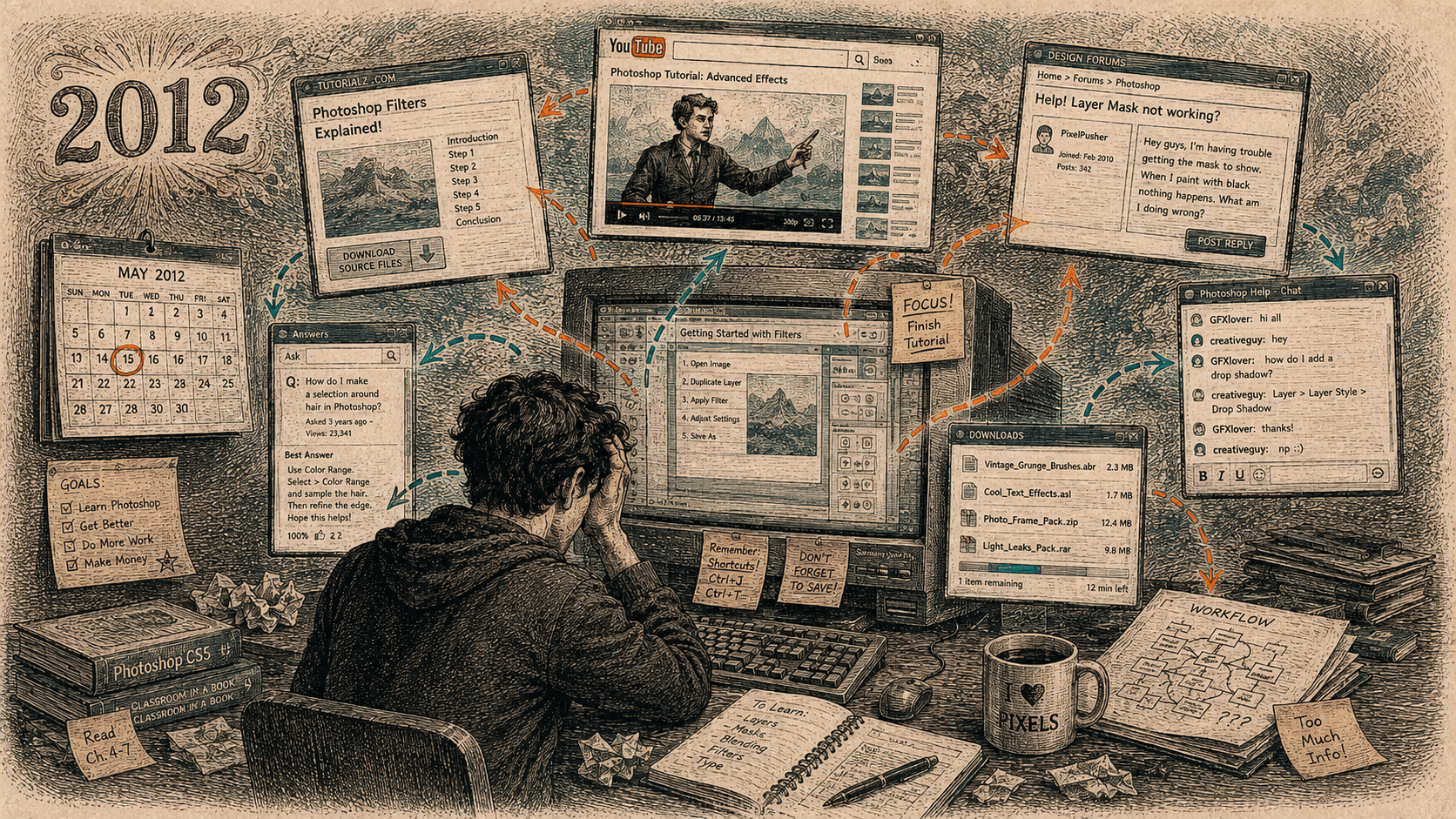
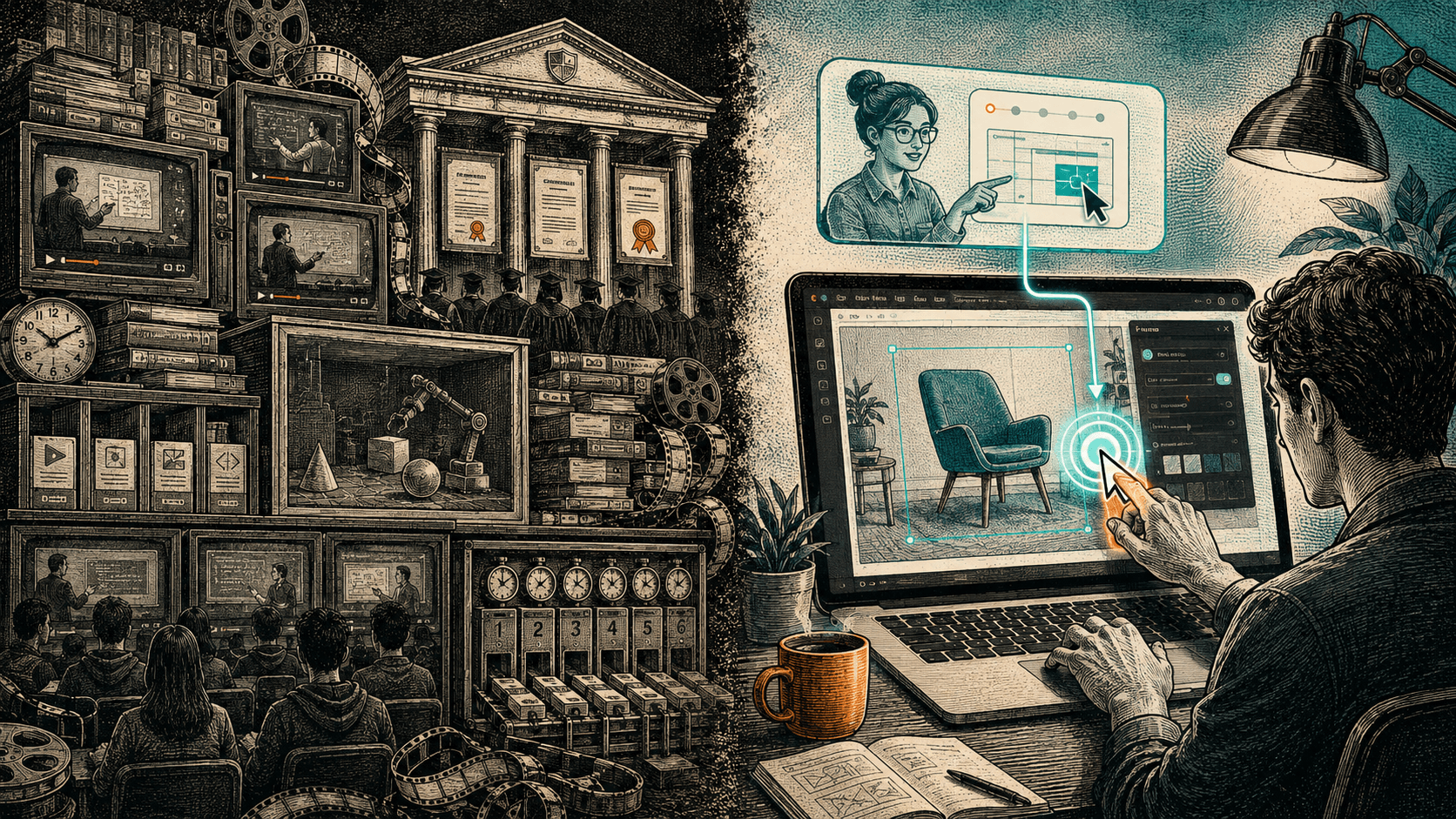
That's the whole explanation, and it's worth sitting with, because almost everything people dislike about online learning follows from it. If a lesson costs real money and weeks of someone's life to produce, then it has to be made once and sold many times. Made once means made for nobody in particular. Sold many times means it has to look like enough - twenty hours, forty modules, a certificate at the end - because nobody pays a hundred dollars for the four minutes they actually needed.
None of that came from thinking about how people learn. It came from the cost of a camera and an editor.
what the format was hiding
Once you see a course as a compression format rather than a teaching method, its faults stop looking like sloppiness and start looking structural:
- It's identical for everyone. The beginner and the person who has done this for six years get the same forty minutes.
- It's linear. You can't index into someone's video the way you can index into a page, so you scrub, guess, and lose the thread.
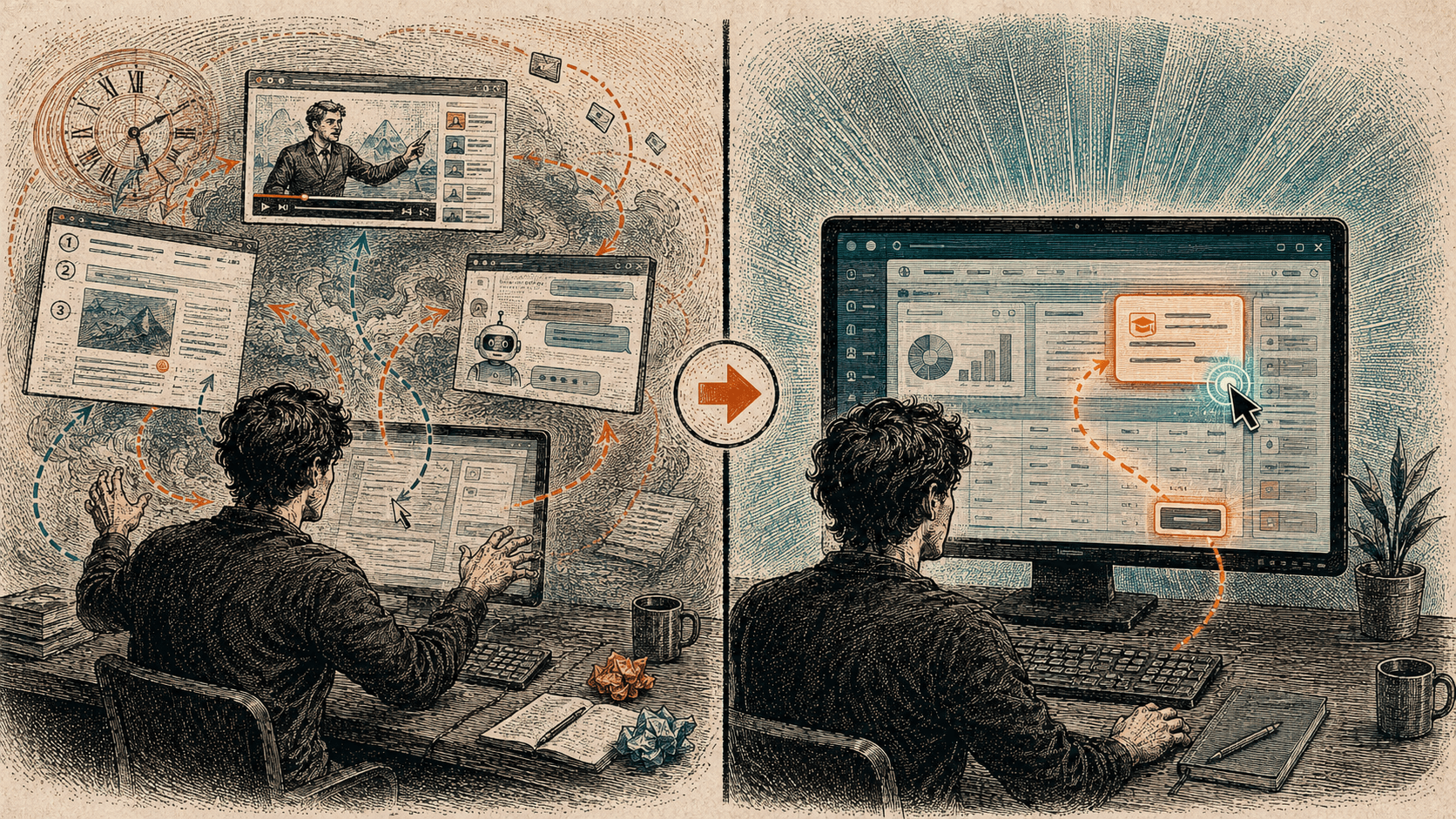
- It's front-loaded. All the help sits before the work, and none of it is there during.
- It's slow by design. Length is a proxy for value when you're selling a package.
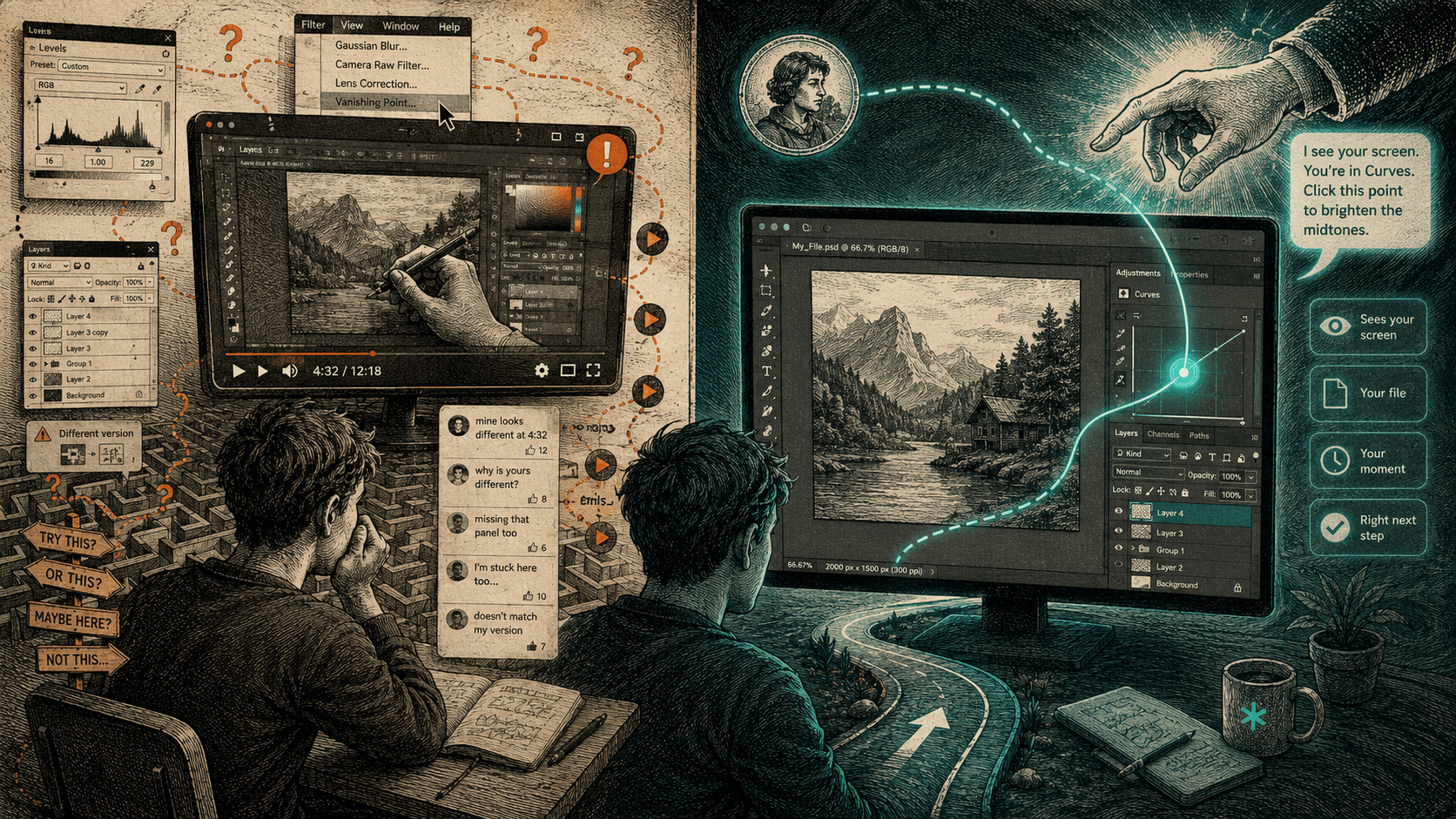
- It can't see you. Nothing you do changes what it says next, which means it can never be wrong about you, and can never correct you either.
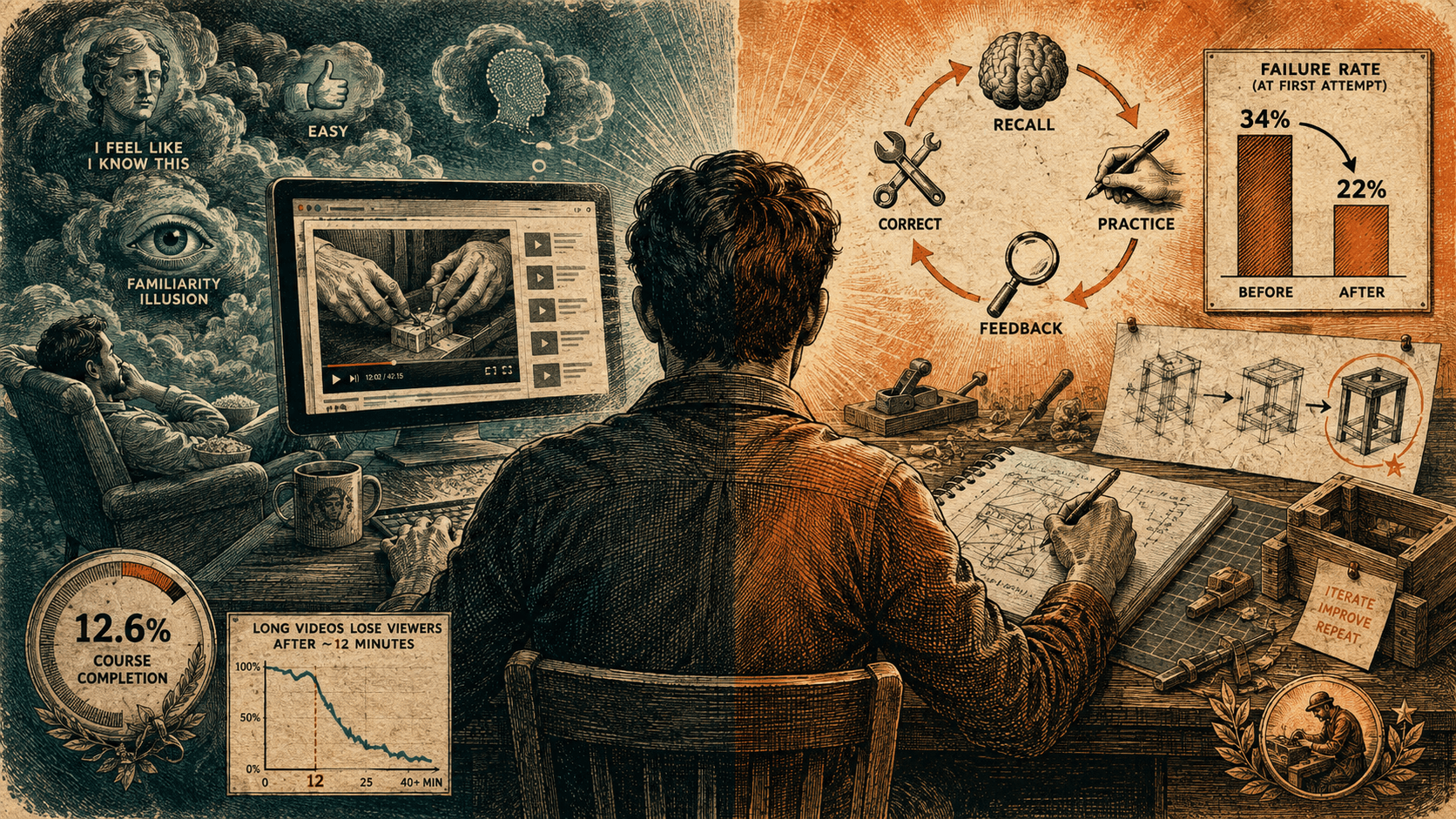
And so, famously, almost nobody finishes. Fewer than one in ten. That number gets read as a story about discipline, and I think it's a story about format: people don't abandon things that respond to them. They finish games that are far harder than any course, because a game is about them and adjusts as they go.
every constraint that produced it is gone
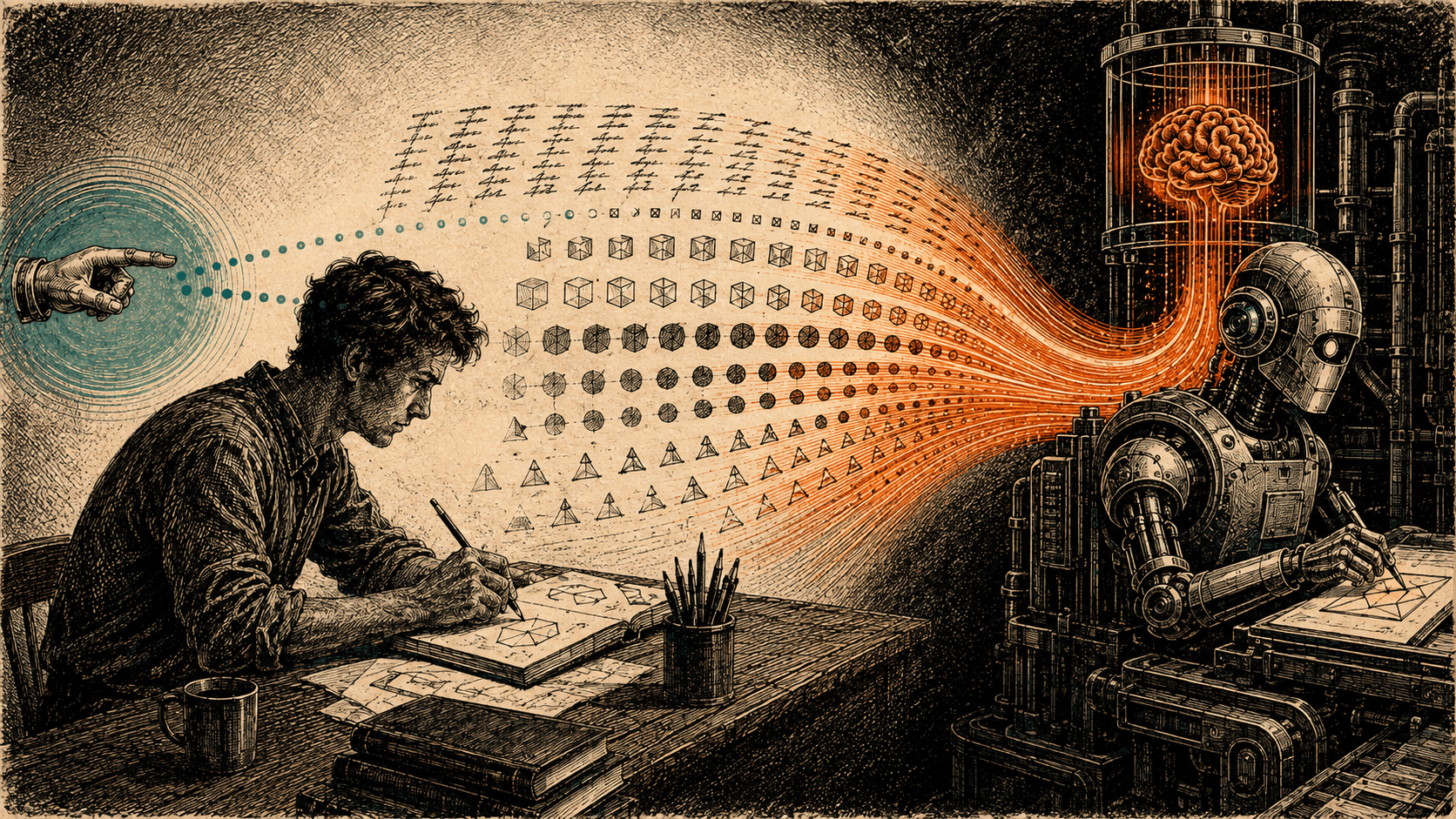
Production used to be the expensive part. It isn't. A lesson can now be generated for one person, about the exact thing in front of them, pitched at what they already know. It can notice they understood the first three steps and skip them. It can explain the same idea a third way, a third time, without sighing. It can be wrong about them and then adjust, which no recording has ever done.
The moment a lesson costs almost nothing to make and can be made for exactly one person, the reason to package twenty hours of it and sell it to a hundred thousand people evaporates.
the unit keeps getting smaller
This has happened everywhere else already, and it always looks the same. The unit that made sense when distribution was expensive gets broken apart the moment it isn't.
- Albums became tracks, because pressing a record was expensive and streaming one isn't.
- TV schedules became streams, because a broadcast slot was scarce and a stream isn't.
- Encyclopedias became search, because printing was expensive and indexing isn't.
Education is the last big one still sold in the old unit. People still buy the album. The course is twenty hours of material wrapped around the ninety seconds you came for, and the wrapper is what you've been paying for, because there was no way to buy just the part you needed.
You didn't want a course. You wanted the four minutes of it that applied to you, at the moment you needed them.
speed is the point, not a feature
The metric that matters for learning was never hours of content. It's how long you stay stuck. That's the number a person actually feels: the gap between hitting a wall and being past it.
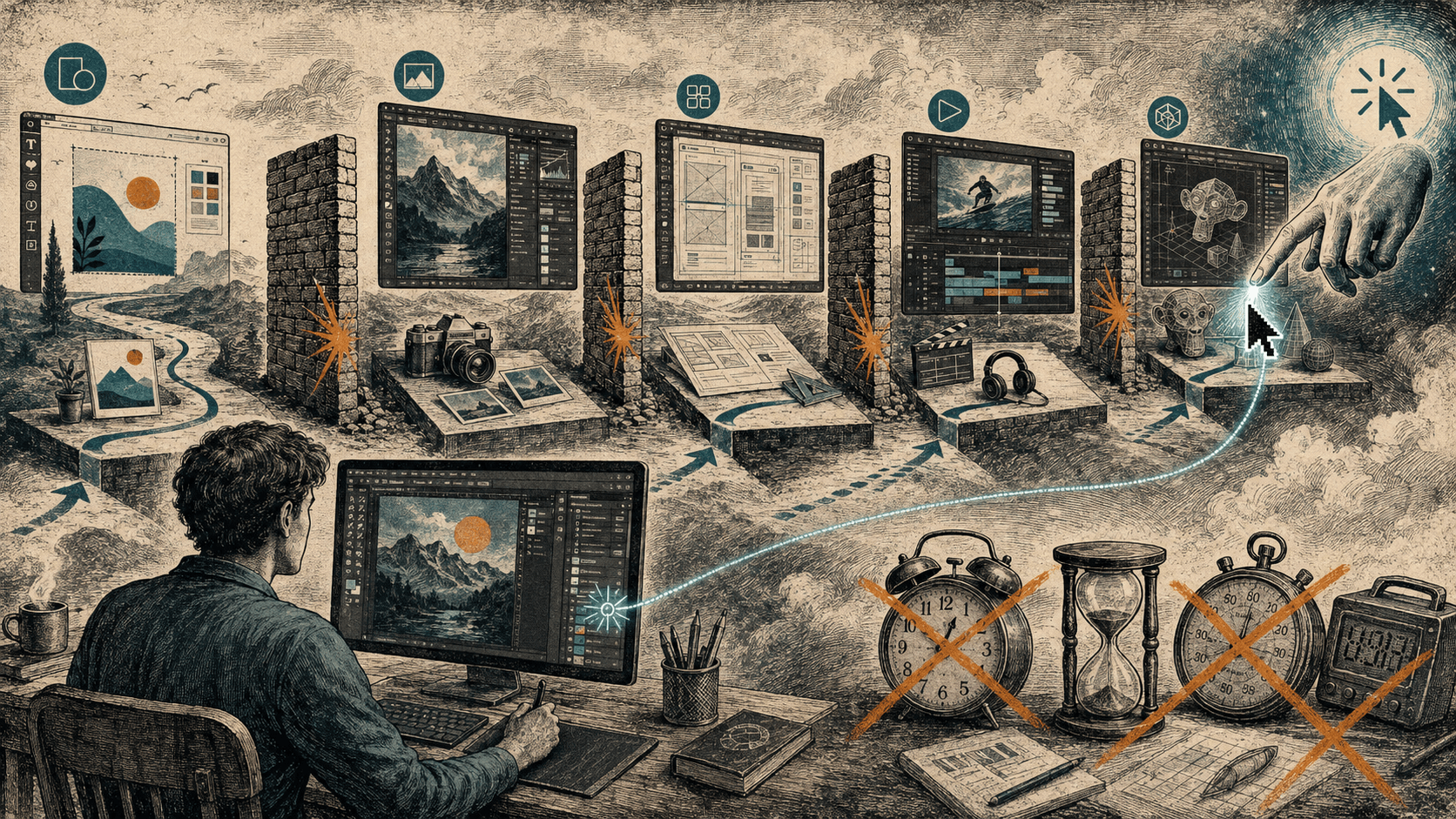
A course optimises the wrong end of that. It offers you twenty hours in advance to shorten a problem you haven't had yet, and it isn't there when you have it. No child ever wanted the twenty-hour lecture. Children are honest about that and adults simply learned to sit still; both only put up with it because it was the only thing on offer. Cutting time-stuck from thirty minutes to under a minute doesn't sound like a revolution, but do it eight times a day and your relationship with the subject changes - and over a year, so does what you're capable of.
That compounding is the real argument. Not that learning becomes faster in a single sitting, but that when getting unstuck is cheap you attempt things you would previously have avoided, and attempting things is the entire mechanism by which anyone gets good.
personal, interactive, and - genuinely - more fun
The word "interactive" got worn out by a decade of edtech that meant a quiz at the end of a video. That isn't interaction. Interaction is when the thing changes because of what you did.
Teaching that can see what you are actually doing is interactive in the only sense that matters: it is looking at your attempt, your mess, your misunderstanding, and what it says next depends on what you just did. It can be wrong about you, which is precisely what makes it able to correct you. That used to require a human tutor, and tutors were the most effective and least affordable thing education ever produced.
And there's something people undersell here, which is that this is simply more enjoyable. Being stuck is miserable. Being walked through your own real task, and finishing the thing you actually sat down to do, is not a chore you're pushing through for a certificate - it's the good part. A course asks you to defer satisfaction for twenty hours. This gives it to you in the first minute, and the reason that matters isn't motivation-poster fluff: enjoyable things get repeated, and repetition is where skill comes from.
what this makes possible
If the lesson can be made for one person at the moment of need, then a lot of things that look fixed stop being fixed. The gap between someone who can afford a mentor and someone who can't narrows, because guidance stops being a scarce human. The 40-hour "learn X" course becomes a strange artefact, like a printed train timetable. And the phrase "I don't know how to use that" changes meaning - not a wall any more, just something you haven't asked about yet.
That's a bigger claim than a software product, and I'd rather state it as what it is: a bet. But it follows from something simple and hard to argue with - the constraint that made courses look like courses is gone, and formats never outlive their constraints by much.
the course is already losing
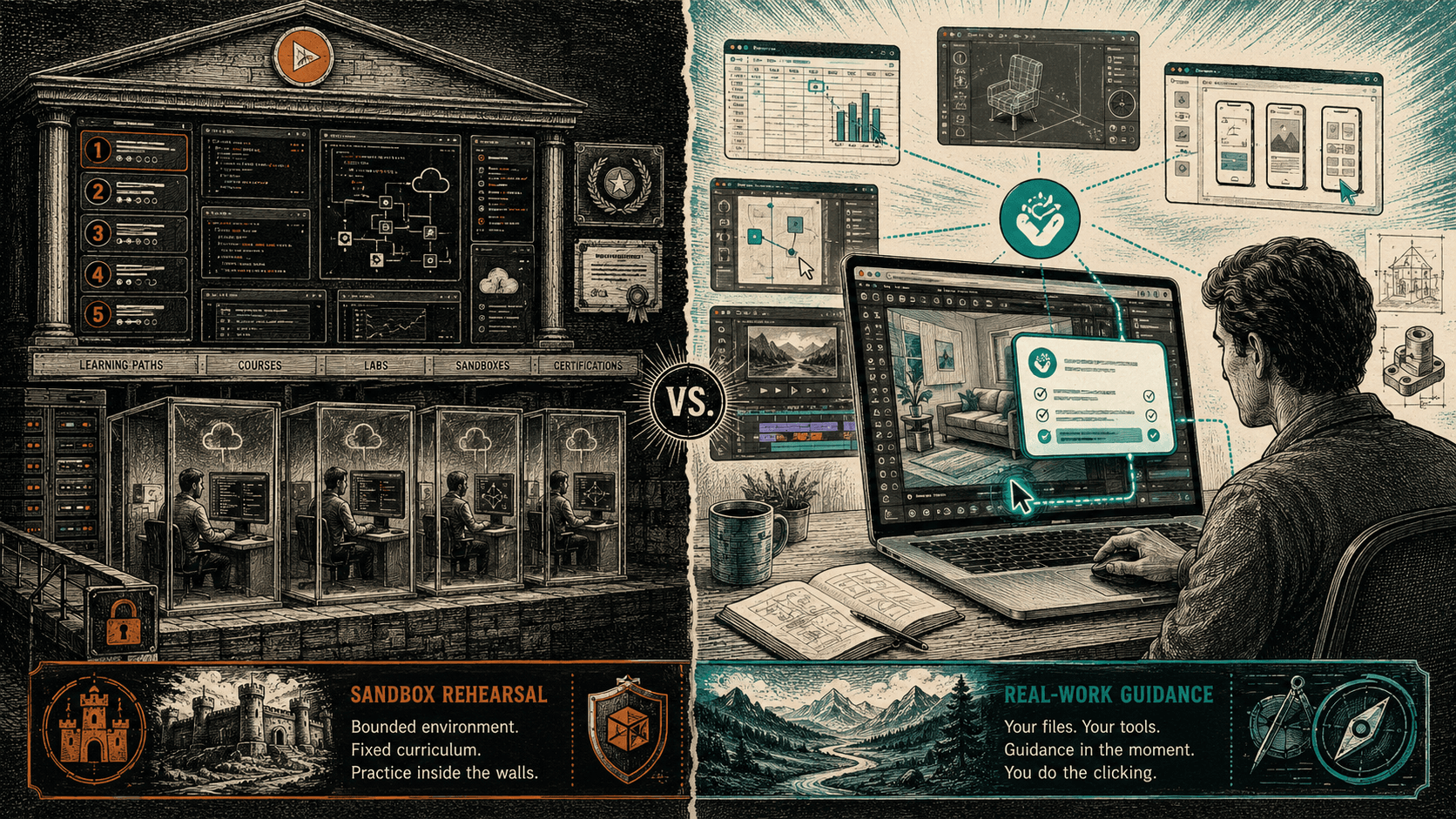
HeyBraza is the small, early version of this. It answers about your file, in your version, at the moment you're stuck - which is the only place the skill was ever going to come from. It's no magic trick, and it doesn't have to be. The argument doesn't stand on the product; the product is just what the argument looks like once someone builds it.
It competes with the course, not with the app. And the course, I think, is already losing - not to any one product, but to the plain fact that nobody wants to buy twenty hours of someone else's examples when they can have the ninety seconds that were about them.
what to remember
- The twenty-hour course is a shape forced by the cost of making video, not by anything about how people learn.
- Its faults are structural: identical for everyone, linear, front-loaded, slow by design, and unable to see you.
- Fewer than one in ten people finish a course - that's a format problem, not a discipline problem.
- Albums became tracks and encyclopedias became search; education is the last thing still sold in the old unit.
- The metric that matters is time spent stuck, not hours of content - and cheap unsticking compounds.
- Interactive means what it says next depends on what you just did; a quiz after a video is not that.
questions people ask
Are online courses dead?
As a business, no - people still buy them. As the right format, largely yes. The course exists in that shape because video was expensive to produce, so it had to be made once, for everyone, and long enough to feel worth the price. None of those constraints still hold, and formats rarely outlive the constraints that produced them.
What is the new way of learning?
Learning inside the work instead of before it. Rather than sitting through a course and then trying to reproduce it, you attempt the real thing and guidance arrives at the moment you're stuck - about your attempt, at your level. The lesson is generated for one person rather than packaged once and sold to a hundred thousand, which is what tutoring always did and what only the wealthy could ever buy.
Why do so few people finish online courses?
Fewer than one in ten finish. It gets blamed on discipline, but people finish games that are far harder than any course. The difference is that a game responds to them. A course is identical for everyone, front-loads all its help before the work, and can never be about your specific problem - so there's nothing pulling you through it.
What does "interactive learning" actually mean?
That what happens next depends on what you just did. A quiz at the end of a video isn't interaction, it's a checkpoint. Teaching that can see your actual attempt is interactive in the real sense: it responds to the mistake you actually made, which is also what makes it able to correct you.
Is learning this way actually faster?
The useful measure isn't hours of content, it's how long you stay stuck. A course offers twenty hours up front against a problem you haven't hit yet; guidance at the moment of need shortens the gap between hitting a wall and getting past it. Do that several times a day and it compounds - mostly because cheap unsticking makes you attempt things you'd otherwise avoid.
sources
// learn a specific app
 learn illustrator
 learn sketch
 learn framer
 learn canva
stop reading. go do something - guided, on your own screen.
try for FREE today