how to learn Photo Editing
learn photo editing by working on your own photos in photoshop, affinity photo, procreate or firefly. HeyBraza points at the exact adjustment on your screen while you edit, so you learn each move by doing it once on a picture you care about.
what editing a photo means
photo editing is deciding what a picture should have looked like and then making that true. crop and level first, then exposure and white balance, then local work - lift a face out of shadow, cut a subject off its background, take the bin out of the corner of the frame. almost all of it happens on layers and masks, so the original pixels stay intact underneath.
a finished edit is a file that leaves the app: a jpg for the web, a png with real transparency for a cutout, a psd or tiff you can reopen with layers alive. the skill is selection and restraint - a clean edge around hair, a mask painted in black and white rather than a hard eraser, and knowing when a photo is finished instead of pushing every slider.
learn it in these apps
 learn photoshop
 learn affinity photo
 learn procreate
 learn firefly
which editor fits the job
four different jobs; price, file type and whether you own a stylus decide which one you open.
- photoshop - the default when the work is layered and someone else will open the file. it owns retouching - object removal, frequency separation, precise selections - and psd is what agencies expect back. it is a subscription, and the scratch disk fills fast if you keep a hundred history states on a small ssd.
- affinity photo - pick affinity photo for photoshop-shaped work without a monthly bill. one payment, real raw editing in the develop persona, masks, frequency separation and object removal all present. the persona switching confuses people for a week, and psd round-trips are good rather than perfect.
- procreate - pick procreate when the work is drawn, not corrected - painting over a photo, line art, illustration on an ipad with a pencil. cheap one-off price, clipping masks and alpha lock a gesture away. no raw develop module, so photographs mostly pass through it.
- firefly - reach for firefly when the fix is generative: fill the hole an object left, expand a frame that was cropped too tight, build a text effect. it works from a prompt instead of a brush and runs on generative credits that do run out, so save it for moves a mask cannot make.
one photo a day
- day one: one picture, three moves. crop it straight, fix exposure, export a web jpg. no layers yet - just get a finished file out of the app.
- day two: selections. remove the background from a subject, tidy the hair edge, then save it as a png that keeps real transparency.
- day three: masks. paint on a black-and-white layer mask instead of erasing, then invert the mask and watch the same edit flip to the opposite side.
- day four: retouch. remove one object with content-aware or an inpainting brush, then try frequency separation on skin to smooth tone while keeping pores.
- day five: resize a photo for print without turning it to mush, then reopen monday's file and check every layer is still editable.
five habits to drop early
- erasing instead of masking. the eraser deletes pixels permanently; a layer mask hides them and paints them back with white. mask it, so on friday you can undo a decision you made on tuesday.
- cutting out a background and exporting jpg. jpg carries no transparency, so the cutout lands on a white box. export png, or psd if the file goes into someone else's layout.
- scaling a small image up and blaming the app for the mush. resampling invents pixels. start from the largest original you have and set resolution and resample method deliberately.
- fighting a smart object that will not edit. double-click it to open in its own tab instead, and rasterize only when you are certain you will never change it again.
- the mask brush that will not paint. it is nearly always black on black, flow at zero, or the wrong thumbnail selected. check the foreground swatch and the active layer before restarting anything.
hands-on fixes to start with
on your own photo, not a sample file
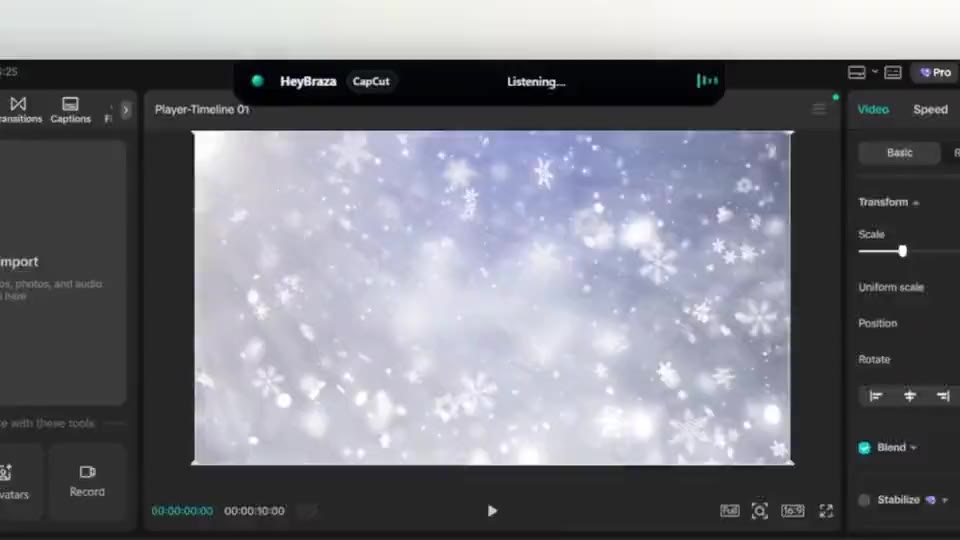
photo work is mostly small hidden switches - wrong swatch, wrong thumbnail, a slider two panels over. HeyBraza takes a screenshot only when you hold the key, so you can point at the mess and say "my brush is not painting". the teal companion lands on the layer thumbnail that is actually selected. you fix it with your own hand. that single correction on a picture you care about beats a whole chapter about masks.
otherwise you are pausing a forty-minute video, guessing which menu the presenter opened in a different app version, and losing the edit you were halfway through. ask out loud instead, in whichever of the 33+ languages you think in. it answers inside photoshop, and just as readily in lightroom, gimp, capture one or whatever else is open on your desktop. start on the free tier, move to HeyBraza Plus at $10 a month if it earns it.
let HeyBraza do this with you
HeyBraza teaches you software while you're using it. hold a key and ask out loud - an ai tutor that sees your screen walks you through every step in real time, pointing and highlighting on your real work, talking you through it as it goes - not someone else's tutorial.
download